Why Does My Car Make Noise When Braking in Johnston, IA?

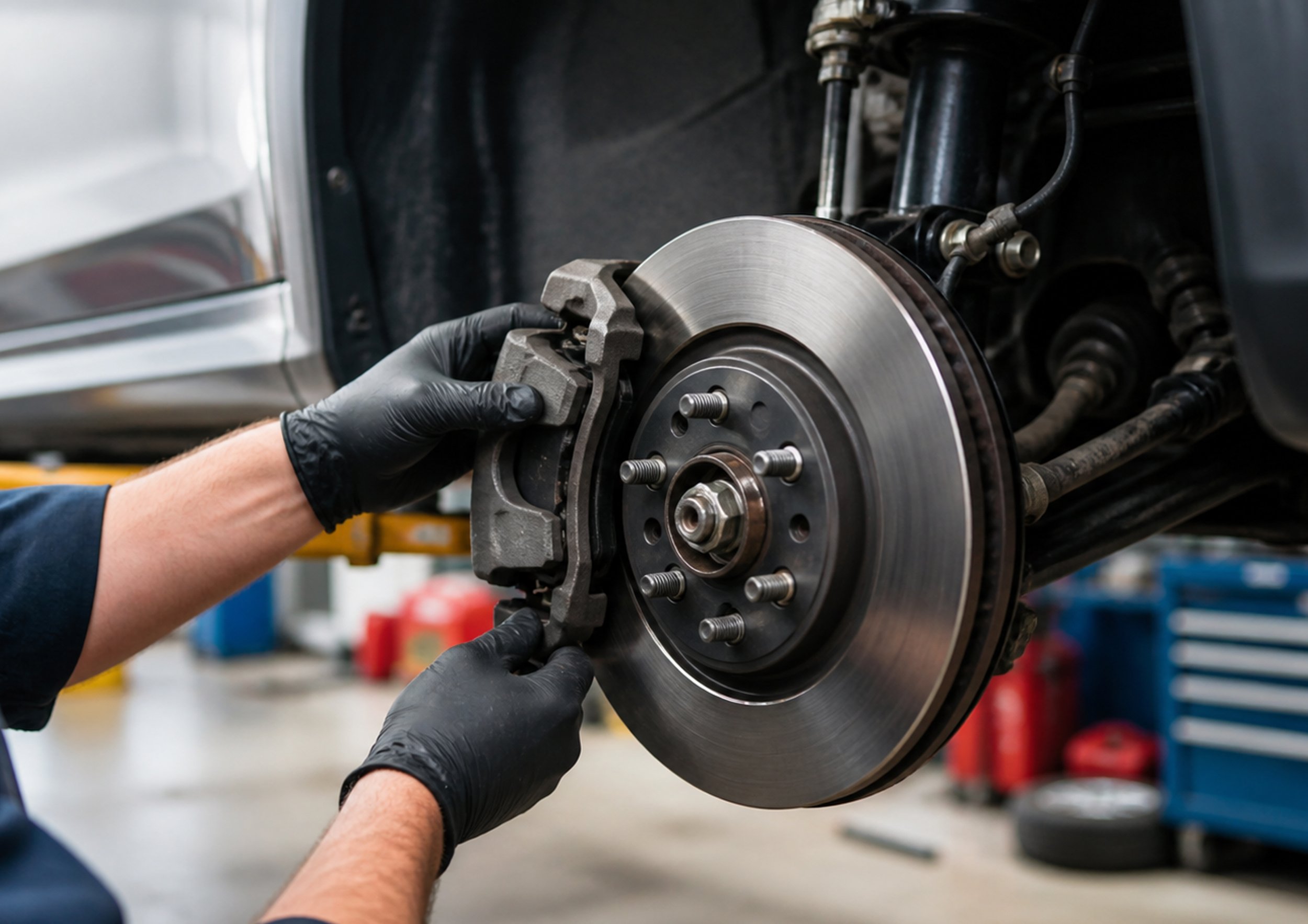
Each brake noise points to a distinct mechanical condition: high-pitched metallic squealing usually comes from built-in pad wear indicators triggered at 3mm (or harmless overnight rotor flash rust after rain), harsh metal-on-metal grinding means your pad lining is completely gone and scoring the rotor, clunking or rattling signals loose caliper hardware clips or worn slide pins, rhythmic scraping often points to a bent backing plate or trapped road gravel, and low groaning or shuddering stems from glazed pads or Iowa road-brine rust pitting. For Johnston drivers, our nearby Urbandale, Grimes, and Ankeny shops pair ASE-certified wheel-off diagnostics and a 40+ point photo Digital Vehicle Inspection with complimentary loaner cars, free STARS pickup, and a 2-year / 24,000-mile brake warranty.
What do the 6 most common braking noises actually mean?
Whether you hear a faint chirp pulling out of your driveway near NW 86th Street or a deep rumble slowing down off I-35/80, identifying the exact sound tells you whether you have a minor debris issue or an urgent safety hazard. In Central Iowa—where humid summer nights, gravel county roads, and winter liquid calcium chloride brine constantly attack exposed wheel hardware—watch for these six distinct brake noises:
- High-Pitched Metallic Squealing or Chirping: Most brake pads feature a small spring-steel wear tab calibrated to rub lightly against the rotor once pad lining wears down to roughly 3mm. (If a light squeal only happens during your first two stops after rain or morning dew and disappears completely, it is typically harmless overnight surface rust.)
- Harsh Metal-on-Metal Grinding or Growling: A rough, grating sound means the friction material on your brake pad is completely worn away and the steel backing plate is chewing directly into the cast-iron rotor—requiring prompt brake pad and rotor service before stopping distances spike.
- Clunking, Clicking, or Rattling When Braking Over Bumps: A sharp clunk or metallic rattle when tapping the pedal on uneven streets like Merle Hay Road often points to missing or corroded stainless-steel abutment clips, worn caliper slide-pin bushings, or loose suspension ball joints shifting under braking weight transfer.
- Tinny Scraping or Rhythmic Rubbing Even Off the Pedal: A thin metallic scraping noise that speeds up and slows down with wheel rotation frequently happens when a small pebble from a gravel driveway or road-construction zone gets wedged between the brake rotor and the sheet-metal dust shield.
- Low-Pitched Groaning, Hum, or Pedal Pulsation: Overheated, glazed brake pads from heavy stop-and-go traffic—or uneven rust scaling on the inner face of a rotor caused by Polk County winter road brine—create a deep groaning vibration felt through the steering wheel and floorboard.
- Hissing or Whooshing Under the Dashboard When Pressing the Pedal: An audible air hiss inside the cabin as you apply the brakes indicates a leaking vacuum brake booster diaphragm—which will make the brake pedal noticeably harder to push if ignored.
How does a harmless brake noise compare to an urgent repair?
Not every sound coming from your wheels means you need a complete brake overhaul today, while other noises mean you should park the car and schedule service immediately. Comparing sound behavior side by side helps Johnston drivers gauge real urgency:
| Brake Sound | Urgency & Driving Risk | Most Likely Cause in Central Iowa | What Johnston Drivers Experience |
|---|---|---|---|
| Brief Morning Squeak (Stops 1–3 Only) | Low urgency—normal if noise vanishes once rotors warm up and wipe clean. | Overnight moisture and Iowa humidity forming a thin film of surface flash rust. | No immediate repair needed unless the squeal persists throughout your commute. |
| Consistent Squeal Every Stop | Moderate urgency—book an inspection within the next 1 to 2 weeks. | Brake pad lining worn to ~3mm wear indicator tab, or glazed pad friction surface. | Allows planned pad-and-rotor replacement before metal backing plates score rotors. |
| Deep Metal-on-Metal Grinding | Critical safety hazard—avoid highway speeds and service immediately. | Zero friction material remaining; steel pad backing plate gouging cast-iron rotor. | Prompt brake repair prevents caliper piston damage and dangerously long stops. |
| Clunking or Rattling Under Braking | Moderate to high urgency—have caliper and suspension hardware checked soon. | Salt-corroded caliper abutment clips, seized slide pins, or worn control-arm bushings. | Restores tight, quiet braking and stops uneven pad drag caused by winter road brine. |
| Tinny Rotational Scraping | Inspect promptly—quick fix if debris, prevents rotor scoring. | Small stone trapped behind rotor dust shield or bent backing plate after tire work. | Often resolved quickly once a technician removes the wheel and clears trapped gravel. |
How we diagnose mysterious brake noises for Johnston drivers
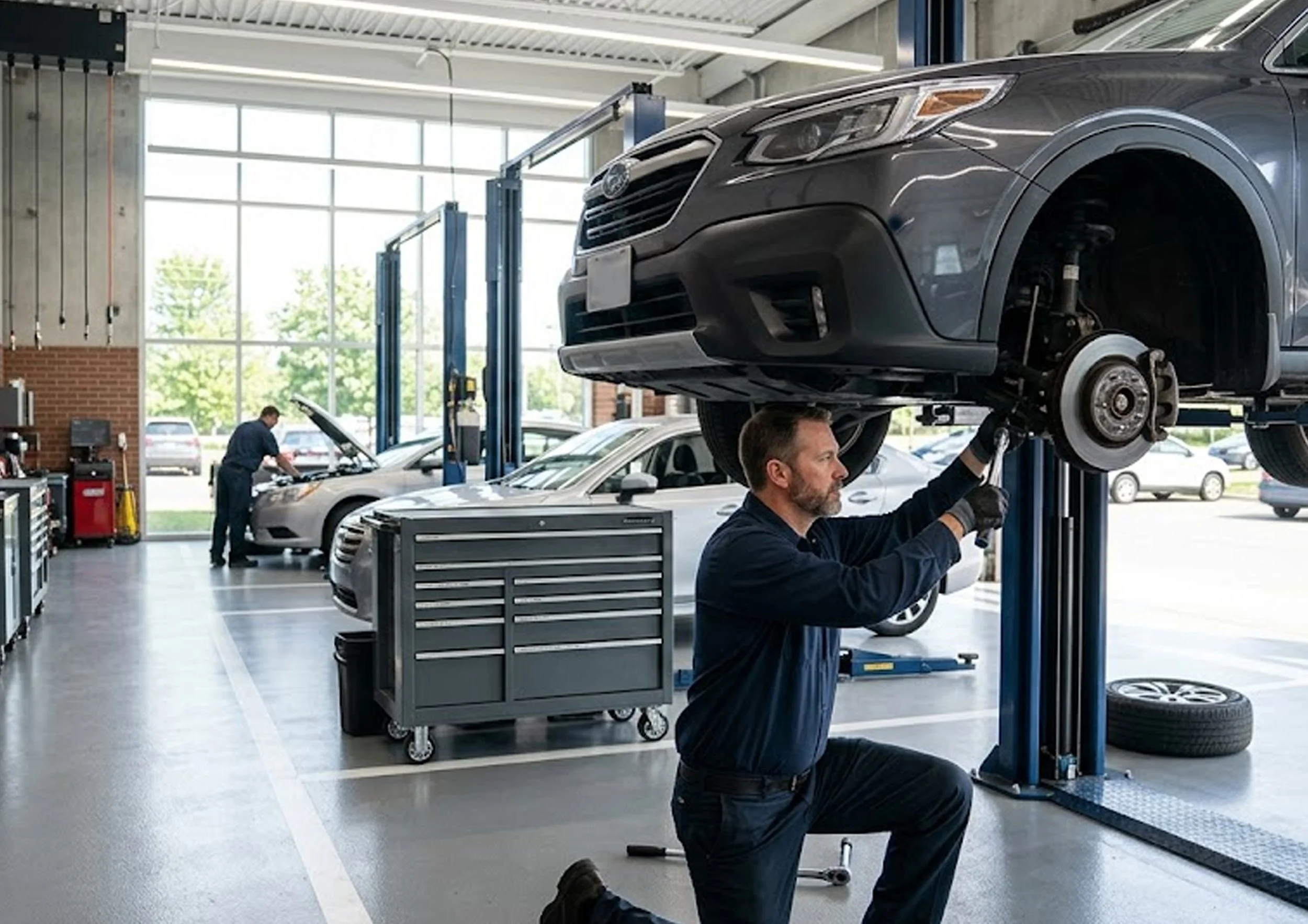
Shade Tree Auto has been solving tricky drivability and brake concerns for Central Iowa families since founder Clint Dudley opened our first shop in a small Johnston garage in 2001 after earning his Automotive Technology degree at DMACC. While we remain active members of the Johnston Chamber of Commerce, today our ASE-certified technicians serve Johnston drivers across three full-service metro shops located just minutes away: south on 70th Street near Merle Hay Mall in Urbandale (3831 70th St), west off Highway 141 at our Grimes HQ (1750 SE 11th St.), and east in Ankeny (1329 SW Ordnance Rd). When your car makes noise while braking, we start with a controlled road test to isolate front-versus-rear and light-versus-heavy pedal sounds, then pull all four wheels on a lift to inspect the inner rotor faces, caliper slide pins, hardware clips, and wheel bearings—not just what’s visible through the spokes.
Don’t Guess at a Grinding or Squealing Sound: Free Loaners (With Free Fuel) + STARS Pickup
Hearing a new noise every time you slow down in Johnston? You never have to lose a workday to get peace of mind. Drivers age 25+ can reserve one of our complimentary loaner vehicles—and we cover the fuel you use while your car is in our bay. Prefer not to drive on noisy brakes at all? Book STARS (Shade Tree Auto’s Remote Service) for free vehicle pickup and return delivery anywhere in the Des Moines metro, paired with text inspection approvals and online payment.
See How STARS Free Pickup & Delivery WorksBrake wear indicator standards, rotor specs, and warranty protection
Federal vehicle safety standards require hydraulic brake systems to deliver predictable stopping performance across wet, dry, and sub-zero road surfaces. Built-in acoustic wear indicators are calibrated to alert drivers once pad friction material reaches 3mm (roughly 3/32")—well before the steel backing plate contacts the rotor—and every brake repair at Shade Tree Auto uses OEM-grade ceramic or semi-metallic friction formulations paired with coated rotors:
Under the federal Magnuson-Moss Warranty Act enforced by the Federal Trade Commission (FTC), having an independent ASE-certified shop diagnose and repair noisy brakes never voids your vehicle’s factory warranty. Every brake repair at Shade Tree Auto is backed by our dedicated 2-year / 24,000-mile brake warranty (plus 4-year / 40,000-mile coverage on qualifying mechanical repairs and nationwide NAPA protection).
When a brake noise does NOT require replacing your pads or rotors
You should never pay for new pads and rotors when the real culprit is a trapped pebble or morning moisture. If our wheel-off 40+ point inspection finds healthy 6mm+ brake pads and discovers that a tiny piece of gravel wedged behind your dust shield—or dry, unlubricated caliper slide pins—caused the noise, we clear the debris or service the hardware rather than selling you brakes you don’t need.
Likewise, if your vehicle has an open NHTSA safety recall (such as an ABS module or brake-hose recall) or a brake noise covered under a new-car factory warranty bulletin, we will point it out and send you straight to the dealership so the automaker fixes it at zero cost to you.
Frequently asked questions
Overnight Iowa dew, rain, or high humidity creates a thin layer of harmless surface flash rust on bare cast-iron brake rotors. During your first two or three stops down the street, the brake pads scrub that rust film off, causing a temporary squeak that disappears completely once the rotor surface is clean. If squealing continues throughout your drive, your pads have likely reached their 3mm wear indicator.
A deep metal-on-metal grinding sound means your brake pad friction material has worn away completely and steel is rubbing against iron—significantly increasing stopping distances and risking caliper damage. Avoid highway speeds on I-35/80, leave extra following distance if driving a short distance to a nearby bay, or call us to arrange safe vehicle transport.
Clunking or rattling when braking over uneven pavement typically points to corroded or missing stainless-steel brake pad hardware clips, worn caliper slide pins allowing the caliper to shift, or worn front suspension ball joints and control-arm bushings reacting to forward weight transfer. A wheel-off lift inspection isolates the exact loose component immediately.
Johnston drivers are just minutes from our three Des Moines metro repair shops: Urbandale at 3831 70th St (just south of Johnston near Merle Hay Mall), Grimes HQ at 1750 SE 11th St. off Highway 141, and Ankeny at 1329 SW Ordnance Rd. We provide complimentary loaner cars with free fuel (for drivers age 25+), a free local shuttle, and STARS free pickup and return delivery Monday through Friday from 7:00 AM to 6:00 PM.
Hearing squealing, grinding, or clunking when you brake?
Book online at our nearby Urbandale, Grimes, or Ankeny shop—or request free STARS pickup in Johnston—and get wheel-off brake photos and millimeter measurements texted to your phone.