How to Read Your Check Engine Light in Johnston, IA

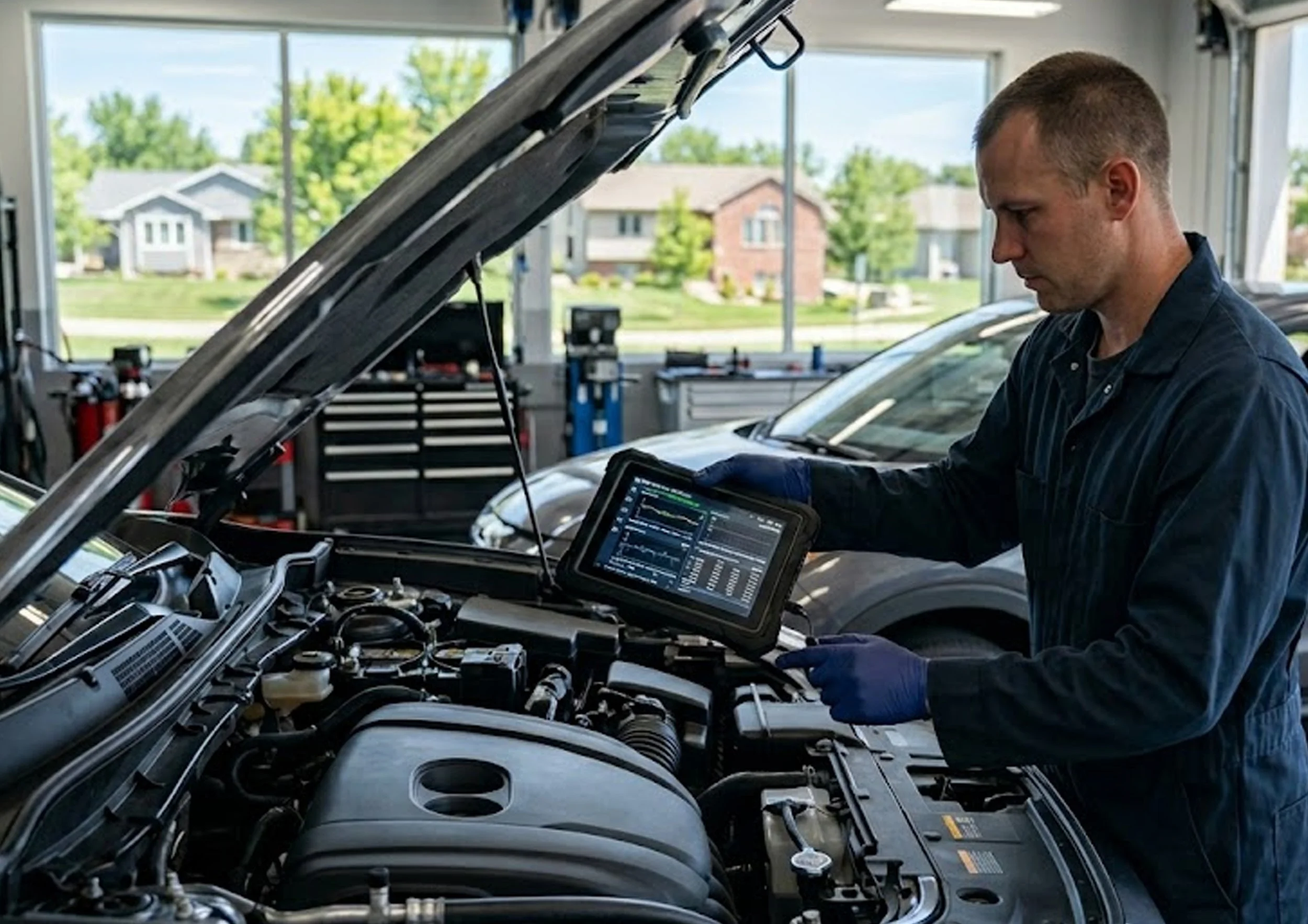
Reading your check engine light starts with two steps: first, read the dashboard light’s behavior—a solid light indicates a stored emissions, fuel-trim, or sensor fault (safe to drive cautiously to a shop if performance feels normal), while a flashing light signals an active cylinder misfire that can ruin your catalytic converter within miles. Second, plug an OBD-II scanner into the 16-pin diagnostic port under your steering column with the key turned to "On" to retrieve the 5-character trouble code (such as P0420 or P0171). Because a trouble code only identifies which circuit reported an anomaly—not which part actually failed—our nearby Urbandale, Grimes, and Ankeny shops pair ASE-certified root-cause testing and a 40+ point photo Digital Vehicle Inspection with complimentary loaner cars and a 4-year / 40,000-mile warranty.
How do you decode a check engine light’s pattern and 5-character OBD-II code?
Whether your check engine light clicks on during a morning commute down NW 86th Street and Merle Hay Road or mid-merge on I-35/80, your vehicle’s onboard computer (ECM) is communicating in a standardized language used on every passenger car and light truck built since 1996. Reading both the warning lamp and the underlying Diagnostic Trouble Code (DTC) works like this:
- Light Pattern 1 — Solid Amber or Yellow Glow: A steady check engine light means the computer detected an out-of-range emissions, EVAP, cooling, or sensor reading across two consecutive drive cycles. If your car accelerates and idles normally, tighten your gas cap first and schedule diagnostic testing promptly.
- Light Pattern 2 — Blinking or Flashing Check Engine Light: A flashing warning lamp signals a severe, active cylinder misfire. Raw unburned fuel is entering your hot exhaust manifold—meaning you should ease off the throttle, avoid highway speeds on I-35/80 or Highway 141, and have the vehicle inspected immediately to prevent catalytic converter meltdown.
- Code Character 1 — Vehicle System (
P,B,C, orU): The first letter identifies which vehicle network logged the fault: P stands for Powertrain (engine, ignition, fuel, emissions, and transmission), B for Body (airbags, climate, interior modules), C for Chassis (ABS, traction control, steering), and U for Network/CAN-bus communication between modules. - Code Character 2 — Standard vs. Automaker-Specific (
0vs.1): A 0 indicates a universal SAE code shared across all brands (for example,P0300), while a 1 (such asP1450) indicates a manufacturer-specific code defined uniquely by Ford, GM, Honda, Toyota, or Subaru. - Code Character 3 — Powertrain Subsystem (
1through8): The third digit narrows down the exact system: 1 or 2 = fuel and air metering, 3 = ignition system and misfires, 4 = auxiliary emissions (EVAP system, catalytic converter, EGR), 5 = vehicle speed and idle control, 6 = computer/ECM output circuits, and 7 or 8 = transmission. - Code Characters 4 & 5 — Specific Fault Index (
00to99): The final two digits identify the exact circuit or threshold triggered—for instance,P0304points specifically to a Cylinder 4 misfire, whereasP0442indicates a small Evaporative Emission Control (EVAP) vapor leak.
How does a basic OBD-II code reader compare to professional bi-directional diagnostics?
Plugging in a $30 pocket scanner or getting a free printout at an auto parts counter is a helpful way to see which code triggered your light, yet a trouble code is only the starting clue—never a parts shopping list. Comparing a basic code scan against full-service engine and electrical diagnostics shows why root-cause testing saves Johnston drivers from wasted money:
| Diagnostic Capability | Basic Code Reader / Parts-Store Scan | Professional Bi-Directional Diagnostics | What Johnston Drivers Experience |
|---|---|---|---|
| Modules & Data Access | Reads generic Powertrain (P0) codes only; blind to ABS, transmission, and body modules. | Accesses all vehicle control modules, Mode $06 misfire counters, and freeze-frame snapshots. | Shows exact engine RPM, coolant temp, and load at the split second the fault occurred. |
| Root-Cause Verification | Prints a generic label (e.g., "Bank 1 Sensor 1") without testing why it triggered. | Tests live fuel trims, EVAP smoke-machine pressure, fuel-rail PSI, and circuit load. | Catches a $40 cracked vacuum hose instead of selling you a $350 oxygen sensor. |
| Iowa Weather & Brine Faults | Cannot distinguish between a failed sensor and a road-salt corroded ground wire. | Oscilloscope and voltage-drop testing verify harness continuity and connector integrity. | Solves intermittent cold-morning and wet-road electrical glitches on the first visit. |
| Clearing Codes Safely | Erasing codes wipes freeze-frame clues and resets emissions readiness monitors. | Preserves diagnostic data, completes the verified repair, and confirms monitor readiness. | Turns off your dashboard light permanently rather than having it return 30 miles later. |
| Repair Warranty | Zero warranty on DIY parts guessed from a code printout. | 4-year / 40,000-mile local mechanical warranty + 2-year / 24,000-mile nationwide NAPA warranty. | Long-term peace of mind across the Des Moines metro and on out-of-state road trips. |
How we turn raw trouble codes into verified answers for Johnston drivers
Shade Tree Auto has been diagnosing complex drivability and electrical issues for Central Iowa drivers since founder Clint Dudley opened our first shop in a small Johnston garage in 2001 after earning his Automotive Technology degree at DMACC. While we remain active members of the Johnston Chamber of Commerce, today our ASE-certified technicians serve Johnston commuters across three full-service metro shops located just minutes away: south on 70th Street near Merle Hay Mall in Urbandale (3831 70th St), west off Highway 141 at our Grimes HQ (1750 SE 11th St.), and east in Ankeny (1329 SW Ordnance Rd). Whenever a vehicle arrives with an illuminated check engine light, we record the stored codes and freeze-frame data first—then perform targeted physical tests to confirm whether the true root cause is a sensor, wiring harness, vacuum leak, fuel injector, or ignition component before recommending any repair.
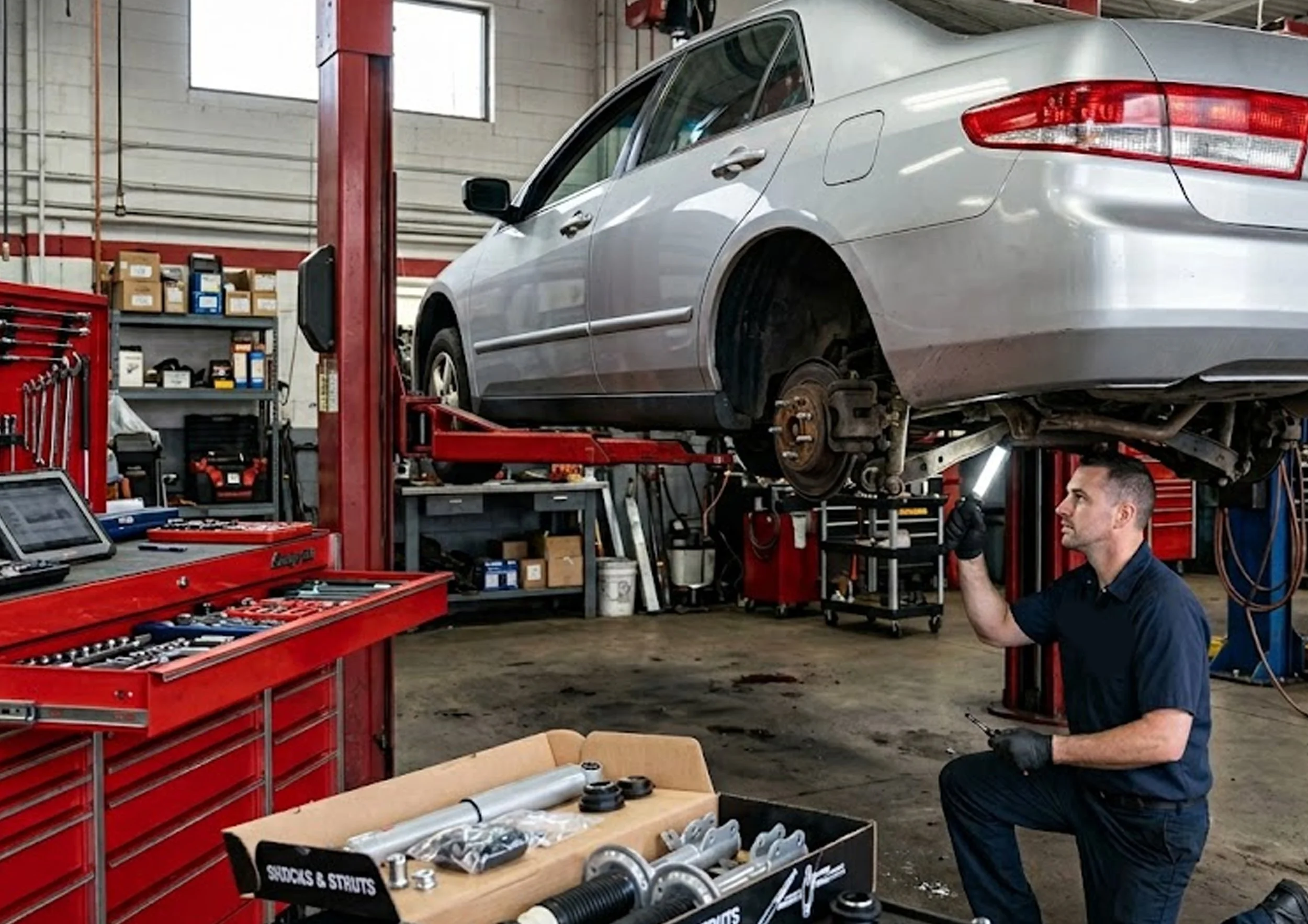
No Guesswork & Zero Workday Disruption: Free Loaners (With Free Fuel) + STARS Pickup
Thorough electrical and drivability testing takes dedicated bay time, so we make sure your Johnston schedule stays on track. Drivers age 25+ can reserve one of our complimentary loaner vehicles—and we cover the fuel you use while your car is in our bay. Prefer not to leave home or the office? Book STARS (Shade Tree Auto’s Remote Service) for free vehicle pickup and return delivery anywhere in the Des Moines metro, paired with text inspection approvals and online payment.
See How STARS Free Pickup & Delivery WorksOBD-II diagnostic standards, emissions warranties, and your right to choose
Since model year 1996, federal Environmental Protection Agency (EPA) regulations have required every passenger vehicle sold in the U.S. to use a standardized 16-pin OBD-II Data Link Connector (DLC) and unified fault codes so drivers are never locked into a single franchise dealership for diagnostics or repairs:
Under the federal Magnuson-Moss Warranty Act enforced by the Federal Trade Commission (FTC), having an independent ASE-certified shop read your vehicle’s trouble codes, perform 40+ point inspections, and complete mechanical or electrical repairs will never void your factory warranty. Every repair at Shade Tree Auto is backed by our 4-year / 40,000-mile local warranty plus a 2-year / 24,000-mile nationwide NAPA warranty.
When reading a check engine light code does NOT require paying a repair shop
If your scanner or parts-store printout shows a small or large EVAP leak code (such as P0442, P0455, or P0456) right after you filled up at a gas station in Johnston, check your fuel cap before spending a dime. Removing the cap, wiping the rubber seal clean, and tightening it until it clicks two or three times will often allow your vehicle’s computer to pass its self-test and turn off the light automatically over the next two or three normal drives.
Additionally, under federal EPA rules, major emissions components—specifically catalytic converters and Engine Control Modules (ECMs/PCMs)—are covered by an automaker’s 8-year / 80,000-mile federal emissions warranty. If our diagnostic testing confirms one of those covered modules failed within that window or ties to an open NHTSA safety recall, we will tell you upfront so the dealership replaces it for free.
Frequently asked questions
On virtually all cars, trucks, and SUVs built since 1996, the trapezoidal 16-pin OBD-II Data Link Connector is located underneath the driver’s side dashboard—typically within 18 inches of the steering column near the hood-release latch or above the pedals. Plug in your code reader with the ignition switched to the "On" position (engine off) to read stored and pending trouble codes.
P0420 indicates catalytic converter efficiency below threshold (which can be triggered by an exhaust leak, sluggish oxygen sensor, or worn catalyst); P0171 means the engine is running "too lean" (too much air or too little fuel, often from a cracked intake boot or vacuum leak); and P0300 signals random/multiple cylinder misfires (commonly caused by worn spark plugs, failing ignition coils, or fuel delivery issues). Each code requires diagnostic verification before replacing parts.
Clearing a code with a scanner or disconnecting the battery only turns the dashboard bulb off temporarily—it does not fix the underlying mechanical or sensor fault, so the light will return once the computer completes its next drive-cycle self-test. Worse, erasing codes deletes valuable freeze-frame diagnostic data that helps technicians pinpoint intermittent issues faster.
Johnston drivers are just minutes from our three Des Moines metro repair shops: Urbandale at 3831 70th St (just south of Johnston near Merle Hay Mall), Grimes HQ at 1750 SE 11th St. off Highway 141, and Ankeny at 1329 SW Ordnance Rd. We provide complimentary loaner cars with free fuel (for drivers age 25+), a free local shuttle, and STARS free pickup and return delivery Monday through Friday from 7:00 AM to 6:00 PM.
Check engine light on? Get real diagnostic answers—not guesswork.
Book online at our nearby Urbandale, Grimes, or Ankeny shop—or request free STARS pickup in Johnston—and get a 40+ point digital inspection texted to your phone before any repair begins.