Why You Should Never Ignore Your Check Engine Light in Johnston, IA

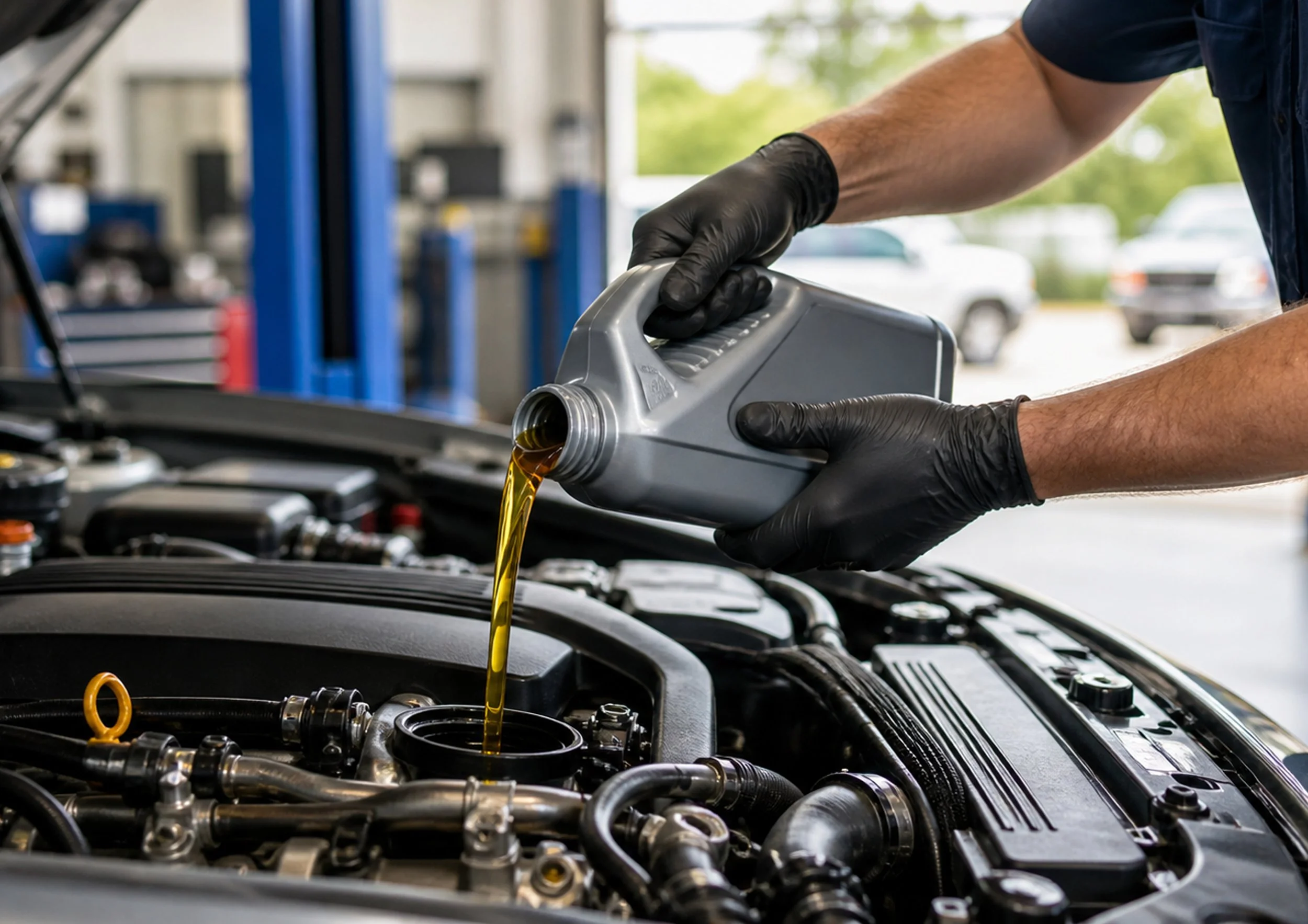
You should never ignore your check engine light in Johnston, IA because putting off a $150 to $320 oxygen sensor, ignition coil, or vacuum leak repair routinely dumps raw, unburned fuel into your exhaust—overheating and melting a $1,500 to $3,200+ catalytic converter. If the light is steady, schedule root-cause diagnostics within a few days before fuel economy drops and secondary damage spreads; if the light is flashing, pull over safely and shut off the engine immediately to prevent severe cylinder misfire damage. In Central Iowa—where sub-zero January cold starts and highway commutes along NW 86th Street, Merle Hay Road, Highway 141, and I-35/80 amplify fuel-trim and ignition faults—Shade Tree Auto’s nearby Urbandale, Grimes, and Ankeny shops pair every ASE-certified diagnostic evaluation and 40+ point photo Digital Vehicle Inspection with complimentary loaner cars (with free fuel), STARS free pickup and delivery, and a 4-year / 40,000-mile warranty.
What are the 6 expensive risks of ignoring a check engine light in Johnston?
Because a car with a steady check engine light often starts, steers, and accelerates normally for the first few weeks, it is tempting to keep driving down NW 86th Street or I-35/80 until "next month." However, modern Powertrain Control Modules (PCMs) switch into protective fuel-enrichment maps the moment a sensor or misfire fault triggers—creating six costly consequences:
- 1. Unburned Fuel Melting Your Catalytic Converter ($1,500–$3,200+ Repair): A sluggish oxygen (O2) sensor, dirty Mass Airflow (MAF) sensor, or weak ignition coil sends excess raw fuel into the exhaust stream—driving internal catalyst temperatures past 1,600°F until the precious-metal honeycomb melts and restricts exhaust flow.
- 2. Flashing Check Engine Light Signals Active Cylinder Misfires: A blinking light means raw gasoline is actively dumping into your exhaust manifold right now—capable of destroying a catalytic converter in just a few miles of highway driving on Highway 141 or I-35/80.
- 3. 15% to 25% Loss in Fuel Economy Every Week You Wait: When a faulty coolant temperature sensor or air-fuel sensor forces the computer into a rich "open-loop" fuel map, you burn extra gallons of gas on every Johnston commute—often wasting more money at the pump than the sensor repair itself costs.
- 4. Sub-Zero Cold-Start No-Starts & Sudden Stalling in Iowa Winters: Weak ignition coils, failing crankshaft/camshaft position sensors, and vacuum leaks often behave tolerably at 55°F—only to leave you stranded in your driveway when January temperatures drop below 0°F.
- 5. Masking a Second, Urgent Failure Behind an Already-Lit Bulb: Your dashboard only has one check engine light; if it stays illuminated for six months over a minor EVAP purge valve, you will never notice when a critical Variable Valve Timing (VVT) oil-control code or lean-misfire fault joins it.
- 6. Missed Undercarriage & Safety Inspection Opportunities: Scheduling proper engine and electrical diagnostics puts your vehicle on a lift for a 40+ point Digital Vehicle Inspection—catching 3mm brake pads, weak battery Cold Cranking Amps, and winter road-brine rust early.
How does a steady check engine light compare to a flashing check engine light?
Knowing the difference between a steady amber light and a blinking light tells you immediately whether you can drive to our bay or need to shut the engine down right away:
| Diagnostic Factor | Steady Check Engine Light | Flashing Check Engine Light | What Johnston Drivers Should Do |
|---|---|---|---|
| Urgency Level | Moderate-to-high priority; safe to drive short distances if gauges & power feel normal. | Critical emergency; active misfire is damaging engine & exhaust components now. | Book diagnostics within days for steady; pull over immediately for flashing. |
| Common Root Causes | O2/air-fuel sensors, EVAP purge valves, MAF sensor, thermostat, or VVT solenoids. | Failed ignition coil, fouled spark plug, stuck-open fuel injector, or low compression. | Requires bi-directional live-data testing—not generic code-reader guesswork. |
| Catalytic Converter Risk | Gradual overheating and poisoning from rich fuel trims over weeks of driving. | Rapid meltdown above 1,600°F within minutes of highway driving. | Fixing a $220 coil early saves a $1,500–$3,200+ catalytic converter replacement. |
| Drivability Symptoms | Often feels normal at first, with subtle MPG drop or rough cold-morning idle. | Noticeable engine shaking, loss of power, and raw fuel odor from the tailpipe. | Never ignore subtle winter rough-idle symptoms along Merle Hay Rd or Hwy 141. |
| Next Step at Shade Tree Auto | Reserve a bay slot, free loaner car, or STARS free home/office pickup. | Shut off engine and arrange a tow to our nearest Urbandale, Grimes, or Ankeny bay. | Clear photo & test-data report texted to your phone before any repair begins. |
Why bi-directional root-cause diagnostics beat free "code-reader" part guessing
Shade Tree Auto has been solving complex check engine and drivability faults for Central Iowa drivers since founder Clint Dudley opened our first shop in a small Johnston garage in 2001 after earning his Automotive Technology degree at DMACC. While we remain active members of the Johnston Chamber of Commerce, today our ASE-certified technicians serve Johnston commuters across three full-service metro shops located minutes away: south on 70th Street near Merle Hay Mall in Urbandale (3831 70th St), west off Highway 141 at our Grimes HQ (1750 SE 11th St.), and east in Ankeny (1329 SW Ordnance Rd). A free scan at a retail parts counter only reads a generic trouble code (such as P0171 System Too Lean or P0420 Catalyst Efficiency)—never the root cause—which leads drivers to waste hundreds of dollars swapping parts that weren’t broken. Our diagnostic specialists test live short- and long-term fuel trims, smoke-test EVAP and intake systems for hairline vacuum leaks, measure fuel rail pressure, and verify electrical circuit integrity before recommending a single part.

Diagnose Your Check Engine Light Without Missing Work: Free Loaners + STARS Pickup
Because accurate root-cause testing requires cold-soak verification, smoke-machine leak checks, and live road-test data logging, you shouldn’t have to sit in a waiting room while we pinpoint your check engine light. At Shade Tree Auto, drivers age 25+ can reserve one of our complimentary loaner vehicles—and we cover the fuel you use while your car is in our bay. Have a steady check engine light and prefer to stay at home or your office in Johnston? Book STARS (Shade Tree Auto’s Remote Service) for free pickup and return delivery, paired with text approvals and online payment.
See How STARS Free Pickup & Delivery WorksCatalyst meltdown thresholds, federal 8-year/80,000-mile emissions rights, and our 4/40 warranty
Catalytic converters normally operate between 750°F and 1,200°F to neutralize exhaust pollutants—but raw fuel from an ignored misfire pushes core temperatures past 1,600°F, melting the ceramic substrate. Addressing the underlying sensor or ignition fault promptly protects your exhaust system while preserving your rights under both the Magnuson-Moss Warranty Act (15 U.S.C. § 2302) and the federal Clean Air Act emissions warranty:
Having an independent ASE-certified facility perform your check engine diagnostics and ignition or sensor repairs keeps your new-car warranty 100% protected—and qualifying repairs at Shade Tree Auto are backed by our 4-year / 40,000-mile local warranty plus a 2-year / 24,000-mile nationwide NAPA warranty.
When a check engine light is a free gas-cap fix—or covered by your automaker for $0
If your check engine light came on shortly after filling up at a Johnston gas station—and the engine runs completely smoothly—step out and check your fuel cap first. A loose cap triggers an EVAP gross-leak code (such as P0455 or P0456); tightening it until it clicks firmly and completing 3 to 5 normal warm-up drive cycles will often turn the light off for $0 (unless the rubber O-ring seal is cracked).
Furthermore, under federal EPA regulations, major emissions components—including catalytic converters, Engine Control Modules (ECMs), and onboard diagnostic computers—are covered by an 8-year / 80,000-mile federal emissions warranty at the franchise dealership. Whenever our diagnostics confirm a failed catalytic converter, ECM, or open NHTSA safety recall eligible for free manufacturer coverage, we hand you our test results and send you straight to the dealership so it costs you nothing.
Frequently asked questions
A steady check engine light means the computer has detected an emissions, sensor, or fuel-trim fault—safe to drive carefully to a repair shop within a few days, though delaying risks fuel waste and catalytic converter damage. A flashing check engine light indicates an active, severe cylinder misfire dumping unburned fuel into the exhaust; pull over safely and shut off the engine immediately to avoid melting your catalytic converter.
A basic OBD-II code reader only reports the symptom a sensor observed (for example, an oxygen sensor reporting a lean fuel mixture), not whether the cause is a cracked vacuum hose, dirty Mass Airflow sensor, weak fuel pump, or wiring fault. ASE-certified diagnostics test live scan data and circuits first so you pay once to fix the true root cause instead of guessing with non-returnable electronic parts.
Disconnecting the battery only erases the stored freeze-frame diagnostic clues your technician needs—and as soon as the computer runs its self-tests again, the light will return if the underlying fault isn’t fixed. On modern vehicles, disconnecting power can also reset throttle-body idle learning and infotainment settings.
Johnston drivers are just minutes from our three Des Moines metro repair shops: Urbandale at 3831 70th St (just south of Johnston near Merle Hay Mall), Grimes HQ at 1750 SE 11th St. off Highway 141, and Ankeny at 1329 SW Ordnance Rd. We provide complimentary loaner cars with free fuel (for drivers age 25+), a free local shuttle, and STARS free pickup and return delivery Monday through Friday from 7:00 AM to 6:00 PM.
Check engine light on? Get clear answers before a small sensor becomes a big repair.
Book root-cause diagnostics online at our nearby Urbandale, Grimes, or Ankeny shop—or request free STARS pickup in Johnston—and get a 40+ point photo inspection texted to your phone.