Why Is My Car Overheating in Johnston, IA?

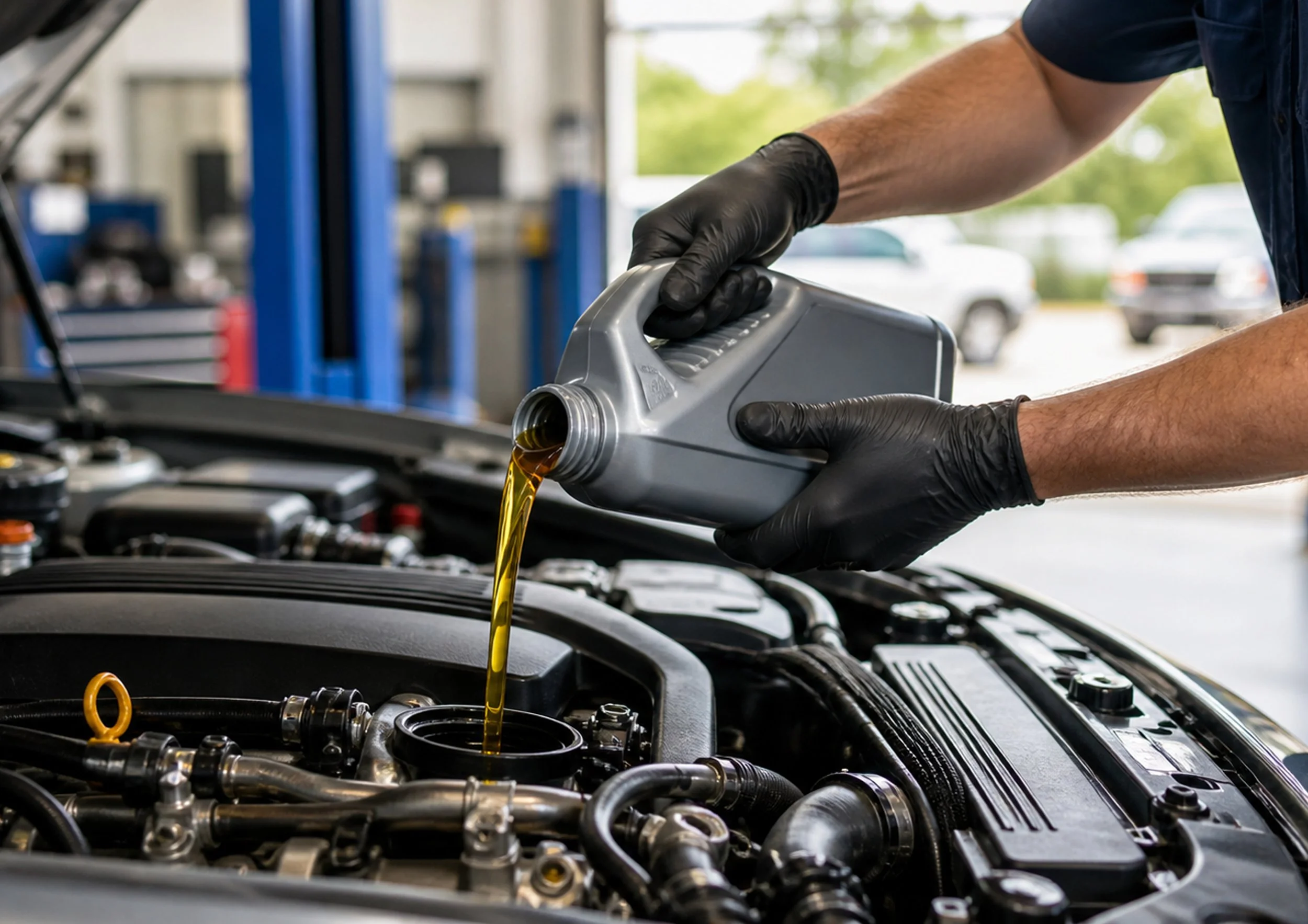
A car overheats when heat cannot move efficiently from the engine block into the radiator and outside air—most commonly due to low coolant from an external hose, water pump, or radiator leak, a thermostat stuck closed, a failed electric cooling fan or relay, a weak radiator pressure cap that fails to hold 15–18 PSI, a clogged or brine-corroded radiator core, trapped air pockets, or an internal head-gasket breach. In Central Iowa—where 95°F summer stop-and-go traffic on I-35/80 pushes cooling systems to peak load while winter freeze-thaw cycles crack plastic radiator tanks and liquid road brine corrodes aluminum cores—our nearby Urbandale, Grimes, and Ankeny shops pair ASE-certified pressure and thermal diagnostics and a 40+ point photo Digital Vehicle Inspection with complimentary loaner cars, STARS pickup, and a 4-year / 40,000-mile warranty.
What are the 7 most common causes of an overheating engine in Johnston, IA?
Modern aluminum engines run tightly controlled operating temperatures between 195°F and 220°F to maximize fuel economy and emissions efficiency. Because that leaves a narrow thermal safety margin, even a single weak cooling component can send your temperature needle climbing during school drop-off traffic along NW 86th Street and Merle Hay Road or at 70 mph on I-35/80 and Highway 141. Watch for these seven primary culprits:
- 1. Low Coolant Level From Leaking Hoses, Water Pump, or Cracked Radiator Tanks: Central Iowa’s extreme swings between 95°F summer heat and sub-zero January nights expand and contract plastic radiator end-tanks and rubber hoses until hairline cracks form—while winter liquid road brine corrodes metal heater pipes and lower radiator seams.
- 2. Thermostat Stuck Closed: The thermostat acts as a thermal valve that stays closed during cold starts so your engine warms up quickly, then opens around 195°F–205°F to send hot coolant through the radiator. When a thermostat jams shut, coolant stays trapped inside the engine block and spikes into the red within minutes.
- 3. Failed Electric Cooling Fan, Relay, or Coolant Temperature Sensor: At stoplights or in drive-thru lanes where natural airflow drops to zero, electric radiator fans pull air through the cooling stack. A burned-out fan motor, blown relay, or faulty sensor causes temperatures to climb rapidly at idle and drop back down once you resume driving.
- 4. Failing Water Pump Impeller or Loose Serpentine Drive Belt: The water pump continuously circulates coolant through the block, cylinder heads, and radiator. A worn bearing weeping coolant from the pump’s weep hole, an eroded impeller, or a slipping serpentine belt starves the engine of coolant flow under highway load.
- 5. Weak or Faulty Radiator Pressure Cap: Your cooling system is pressurized to 15 to 18 PSI, which raises the boiling point of a 50/50 antifreeze mix from 212°F up to roughly 265°F. A worn rubber seal on a $20 pressure cap lets coolant boil over into the overflow tank prematurely.
- 6. Clogged Radiator Core, Old Oxidized Coolant, or Trapped Air Pockets: Neglected antifreeze turns acidic and forms rust-scale deposits inside narrow aluminum radiator tubes—while topping off with hard Polk County tap water or failing to vacuum-bleed air pockets blocks heat transfer.
- 7. Blown Head Gasket or Warped Cylinder Head: If combustion gases breach the head gasket into the cooling jacket, extreme exhaust pressure forces coolant out of the overflow reservoir and causes rapid overheating accompanied by white exhaust steam or milky oil.
How does overheating at idle compare to overheating at highway speed?
Paying attention to when the temperature gauge climbs—whether sitting at a red light on Merle Hay Road or cruising down I-35/80—gives your technician an immediate diagnostic clue. Comparing those driving patterns makes it easy to narrow down what is happening under the hood:
| Overheating Symptom | Most Likely Mechanical Cause | Immediate Driver Action | What Johnston Drivers Experience |
|---|---|---|---|
| Climbs at Idle / Stoplights, Cools Moving | Failed electric cooling fan, blown fan relay, or low coolant level. | Turn off A/C; if needle nears red, pull over safely and shut engine off. | Typical in NW 86th St school pickup lines or summer I-35/80 construction backups. |
| Overheats at 65–70 MPH Highway Speed | Internally clogged radiator core, weak water pump impeller, or partially stuck thermostat. | Ease off throttle, move safely to the shoulder, and shut engine off before redline. | Occurs when high engine load exceeds a restricted radiator’s heat-shedding capacity. |
| Rapid Spike + Cold Cabin Heater Air | Severely low coolant level, large airlock in heater core, or sheared water pump. | Stop driving immediately—lack of cabin heat means coolant is no longer circulating. | Critical warning sign that prevents warped aluminum cylinder heads if caught fast. |
| Sweet Syrup Odor + Steam Under Hood | Split radiator hose, cracked plastic radiator end-tank, or weak pressure cap. | Shut off engine and never open the radiator cap while hot (scalding steam hazard). | Complete cooling system diagnostics locate the exact pressure leak. |
| White Exhaust Smoke + Bubbling Reservoir | Internal head-gasket leak allowing combustion pressure into cooling passages. | Have vehicle towed rather than driven to prevent catastrophic engine damage. | Verified accurately with a chemical combustion-gas block test and cylinder leak-down. |
How we pressure-test and thermally diagnose overheating engines for Johnston drivers
Shade Tree Auto has been solving drivability and cooling system issues for Central Iowa drivers since founder Clint Dudley opened our first shop in a small Johnston garage in 2001 after earning his Automotive Technology degree at DMACC. While we remain active members of the Johnston Chamber of Commerce, today our ASE-certified technicians serve Johnston drivers across three full-service metro shops located just minutes away: south on 70th Street near Merle Hay Mall in Urbandale (3831 70th St), west off Highway 141 at our Grimes HQ (1750 SE 11th St.), and east in Ankeny (1329 SW Ordnance Rd). Instead of guessing between a thermostat, radiator, or water pump, we pressurize the entire cooling system and cap to 15–18 PSI to reveal external seepage, scan radiator inlet-to-outlet temperature drops with infrared thermometry, command electric cooling fans on via bi-directional scan tools, test antifreeze freeze protection down to -34°F, and vacuum-fill new OEM-specified coolant so zero air pockets remain.
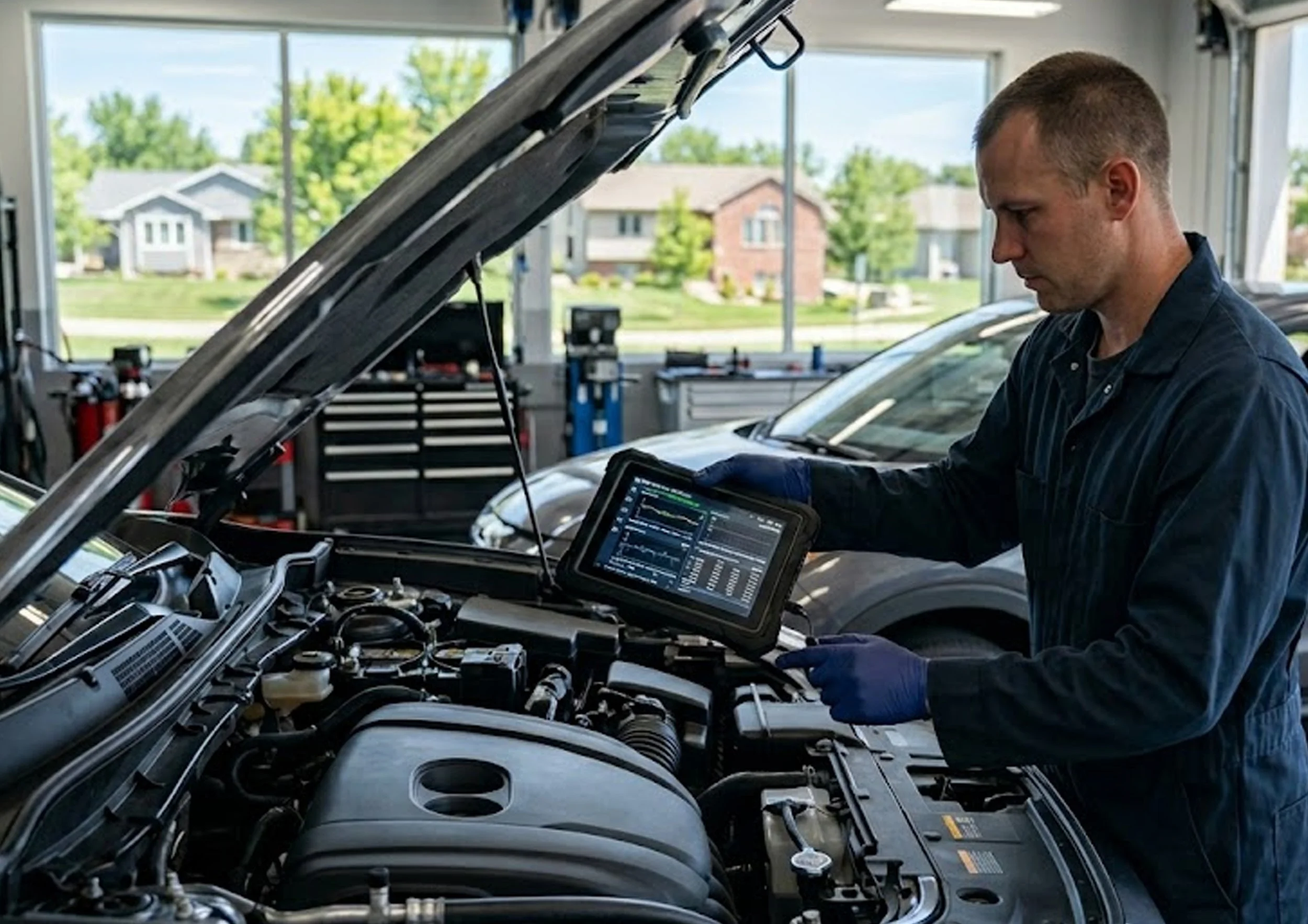
Never Risk Driving an Overheating Car: Free Loaners (With Free Fuel) + STARS Pickup
Pushing an overheating engine even a few miles down I-35/80 can turn a $250 thermostat or hose repair into a $4,000+ warped cylinder head—so we make getting checked out effortless in Johnston. Drivers age 25+ can reserve one of our complimentary loaner vehicles—and we cover the fuel you use while your car is in our bay. Prefer not to leave home or work? Book STARS (Shade Tree Auto’s Remote Service) for convenient pickup and return delivery in the Des Moines metro, paired with text inspection approvals and online payment.
See How STARS Free Pickup & Delivery WorksCoolant boiling points, 15–18 PSI pressure specs, and warranty protection
Properly mixed 50/50 OEM-approved antifreeze and distilled water maintained under 15 to 18 PSI of cap pressure protects Central Iowa engines across both extremes—preventing freeze-ups down to -34°F (-37°C) in January and raising the boil-over threshold to roughly 265°F (129°C) in July:
Under the federal Magnuson-Moss Warranty Act enforced by the Federal Trade Commission (FTC), having an independent ASE-certified facility perform your cooling system diagnostics, coolant flushes, and mechanical repairs maintains your factory warranty—and every cooling system repair at Shade Tree Auto is backed by our 4-year / 40,000-mile local warranty plus a 2-year / 24,000-mile nationwide NAPA warranty.
Emergency roadside rules—and when a $20 pressure cap or recall solves the issue
If your temperature gauge climbs into the red zone or a high-temp warning chime sounds, pull over safely and shut off the engine immediately—never try to "nurse it home" the last five miles, and never unscrew a hot radiator or overflow cap while the engine is steaming, as pressurized 230°F+ coolant can erupt instantly and cause severe burns.
At the same time, an overheating episode doesn’t always mean an expensive radiator or head-gasket bill. Sometimes our pressure test reveals a weak radiator pressure cap, a blown cooling-fan fuse, or an open NHTSA cooling-fan or electric water-pump safety recall—and whenever a simple cap or free dealership recall solves the problem, we will tell you upfront.
Frequently asked questions
First, switch off your air conditioning (which adds heat load to the radiator) and turn your cabin heater and fan to maximum heat to draw heat away from the engine while you look for a safe place to pull off the road. If the needle reaches the red zone or steam appears, pull over safely, shut off the engine immediately, wait at least 30 to 45 minutes before opening the hood, and never remove a hot radiator cap.
Winter overheating in Central Iowa typically happens for one of three reasons: diluted coolant turning into slush inside the radiator tubes during sub-zero nights (blocking circulation), a thermostat stuck closed, or a slow coolant leak caused by winter liquid road brine corroding aluminum radiator seams or metal heater pipes.
Only after the engine has cooled completely—and ideally using distilled water or pre-mixed 50/50 OEM-compatible antifreeze rather than mineral-heavy Polk County tap water. If you ever add plain water in a summer emergency, have the cooling system drained, pressure-tested, and refilled with a proper 50/50 antifreeze blend before freezing Iowa temperatures arrive.
Johnston drivers are just minutes from our three Des Moines metro repair shops: Urbandale at 3831 70th St (just south of Johnston near Merle Hay Mall), Grimes HQ at 1750 SE 11th St. off Highway 141, and Ankeny at 1329 SW Ordnance Rd. We provide complimentary loaner cars with free fuel (for drivers age 25+), a free local shuttle, and STARS pickup and delivery Monday through Friday from 7:00 AM to 6:00 PM.
Temperature gauge climbing or smelling sweet antifreeze under the hood?
Book online at our nearby Urbandale, Grimes, or Ankeny shop—or request STARS pickup in Johnston—and get a pressure-tested cooling evaluation and 40+ point photo inspection texted to your phone.