Why Iowa Winters Are Hard on Your Car in Johnston, IA

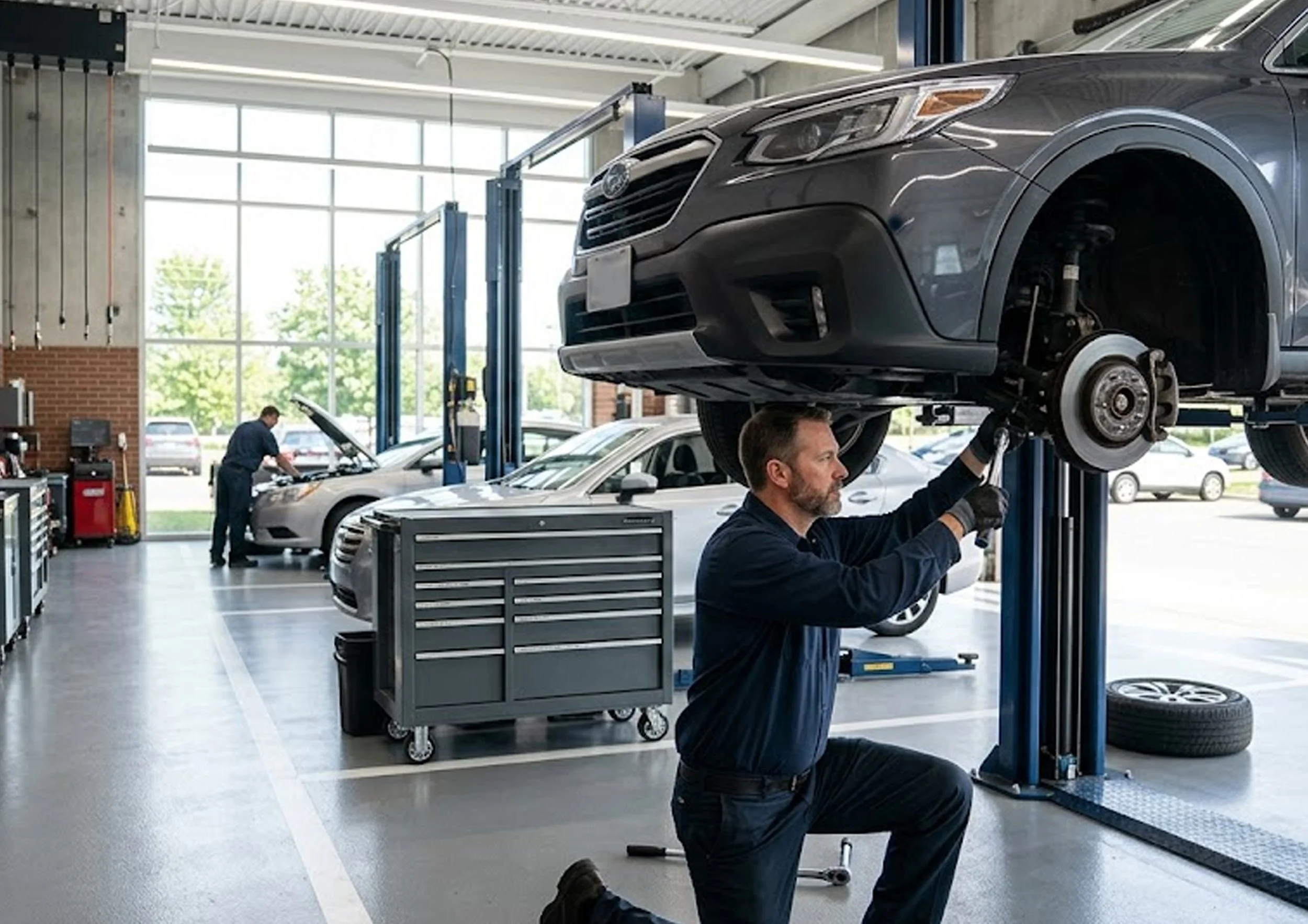
Iowa winters are uniquely punishing on vehicles in Johnston, IA because sub-zero temperatures slash battery Cold Cranking Amps (CCA) by 35% to 60% right as thickened engine oil demands twice the cranking power, Polk County’s liquid calcium chloride road brine aggressively corrodes steel brake lines and seizes caliper slide pins, freeze-thaw potholes fracture suspension joints and knock wheels out of alignment, and short cold-weather trips along NW 86th Street and Merle Hay Road prevent engine oil from evaporating water condensation and raw fuel. To prevent winter breakdowns and spring rust bills, Shade Tree Auto’s nearby Urbandale, Grimes, and Ankeny shops pair every ASE-certified winter checkup and 40+ point photo Digital Vehicle Inspection with complimentary loaner cars (with free fuel), STARS free pickup and delivery, and a 4-year / 40,000-mile warranty.
What are the 7 ways Central Iowa winters punish your car in Johnston?
In Polk County, winter doesn’t just bring snow—it delivers rapid swings from 40°F slushy afternoons to -10°F Arctic blasts, heavy pre-storm liquid brine sprays, and relentless freeze-thaw pavement damage along NW 86th Street, Merle Hay Road, Highway 141, and I-35/80. Here are the seven systems that take the heaviest beating between November and March:
- 1. Sub-Zero Cold Cuts Battery Cranking Power in Half: At 0°F, a car battery loses roughly 35% to 50% of its Cold Cranking Amps (CCA)—and at -20°F, up to 60%—at the exact moment cold engine oil doubles the electrical draw required to turn the starter motor, turning a borderline 3-year-old battery into a morning no-start.
- 2. Liquid Calcium Chloride Road Brine Corrodes Brake Lines & Seizes Calipers: Pre-treatment road brine clings to undercarriage steel brake lines, fuel lines, and brake caliper slide pins far longer than dry rock salt—causing seized slide pins that drag brake pads uneven and rusted hydraulic lines that risk sudden brake-pedal loss.
- 3. Short Winter Drives Dilute Motor Oil With Moisture & Raw Fuel: When your commute across Johnston takes under 10 minutes, engine oil rarely stays above 212°F long enough to boil off crankcase condensation and cold-start fuel enrichment—making a 5,000-mile full-synthetic oil change essential to prevent sludge and timing-chain wear.
- 4. Cold Air Drops Tire Pressure & Hardens All-Season Rubber: Every 10°F drop in ambient temperature lowers tire inflation by about 1 PSI, triggering TPMS lights and reducing sidewall stability—while tires worn below 4/32" of tread lose the biting depth needed to clear packed snow and slush on I-35/80.
- 5. Freeze-Thaw Potholes & Ice Ruts Shift Alignment & Damage Suspension: Water seeping into asphalt cracks freezes, expands, and heaves pavement into sharp potholes that bend wheel rims, wear out tie-rod ends and ball joints, and knock camber and toe angles out of spec.
- 6. Diluted Antifreeze Turns to Slush & Heater Cores Struggle: Coolant that has degraded or been topped off with plain water can freeze into slush inside narrow radiator tubes—blocking circulation and causing paradoxical winter overheating while leaving your cabin defroster blowing lukewarm air.
- 7. Brittle Wiper Blades, Frozen Washer Nozzles & Plastic Radiator End-Tanks: Sub-zero thermal shock cracks aging plastic radiator tanks and serpentine belts, while frozen wiper blades tear rubber edges and strip wiper-arm linkages when turned on over iced windshields.
How does winter stress affect key systems—and what prevents each breakdown?
Understanding how each component reacts to Central Iowa winter conditions makes it easy to stop expensive failures before they leave you stranded on the shoulder:
| Vehicle System | Central Iowa Winter Threat | Proactive Prevention | What Johnston Drivers Experience |
|---|---|---|---|
| Battery & Alternator | 0°F to -20°F cold cuts CCA output by 35%–60% while defrosters & heated seats max out load. | Digital CCA conductance load test + alternator ripple check before deep freeze hits. | Reliable sub-zero startups in your driveway without waiting hours for a jump-start. |
| Brakes & Undercarriage | Liquid road brine rusts steel hydraulic lines and seizes caliper slide pins. | Lift-elevated 40+ point inspection + bi-weekly winter undercarriage car washes. | Prevents four-figure brake-line replacements and uneven pad/rotor wear. |
| Engine Oil & Cold Flow | Conventional or overdue oil thickens like molasses; short trips add water & fuel dilution. | OEM-viscosity full-synthetic oil (0W-20 / 0W-16) changed every 5,000 miles. | Instant oil pressure to camshafts and timing chains on frigid Johnston mornings. |
| Tires & Alignment | 1 PSI drop per 10°F chill + freeze-thaw potholes shifting camber and toe angles. | Monthly cold PSI adjustment, 4/32" snow tread check, and post-winter 4-wheel alignment. | Shorter icy stopping distances on NW 86th St and even tread wear past 60k miles. |
| Cooling & Cabin Defrost | Weak antifreeze slushes in radiator tubes; clogged cabin filters fog windshields. | Refractometer freeze-point check (-34°F) + fresh cabin air filter for max defrost airflow. | Fast windshield clearing and strong cabin heat during Polk County blizzards. |
How we inspect and winter-proof vehicles for Johnston commuters
Shade Tree Auto has been preparing Central Iowa vehicles for brutal Midwest winters since founder Clint Dudley opened our first shop in a small Johnston garage in 2001 after earning his Automotive Technology degree at DMACC. While we remain active members of the Johnston Chamber of Commerce, today our ASE-certified technicians serve Johnston drivers across three full-service metro shops located just minutes away: south on 70th Street near Merle Hay Mall in Urbandale (3831 70th St), west off Highway 141 at our Grimes HQ (1750 SE 11th St.), and east in Ankeny (1329 SW Ordnance Rd). When your vehicle enters our bay, we elevate it on a hydraulic lift to inspect road-brine exposed brake and fuel lines, measure tire tread depth in 32nds across all four corners, load-test battery Cold Cranking Amps, test coolant freeze protection with a refractometer, and text real photos straight to your phone.
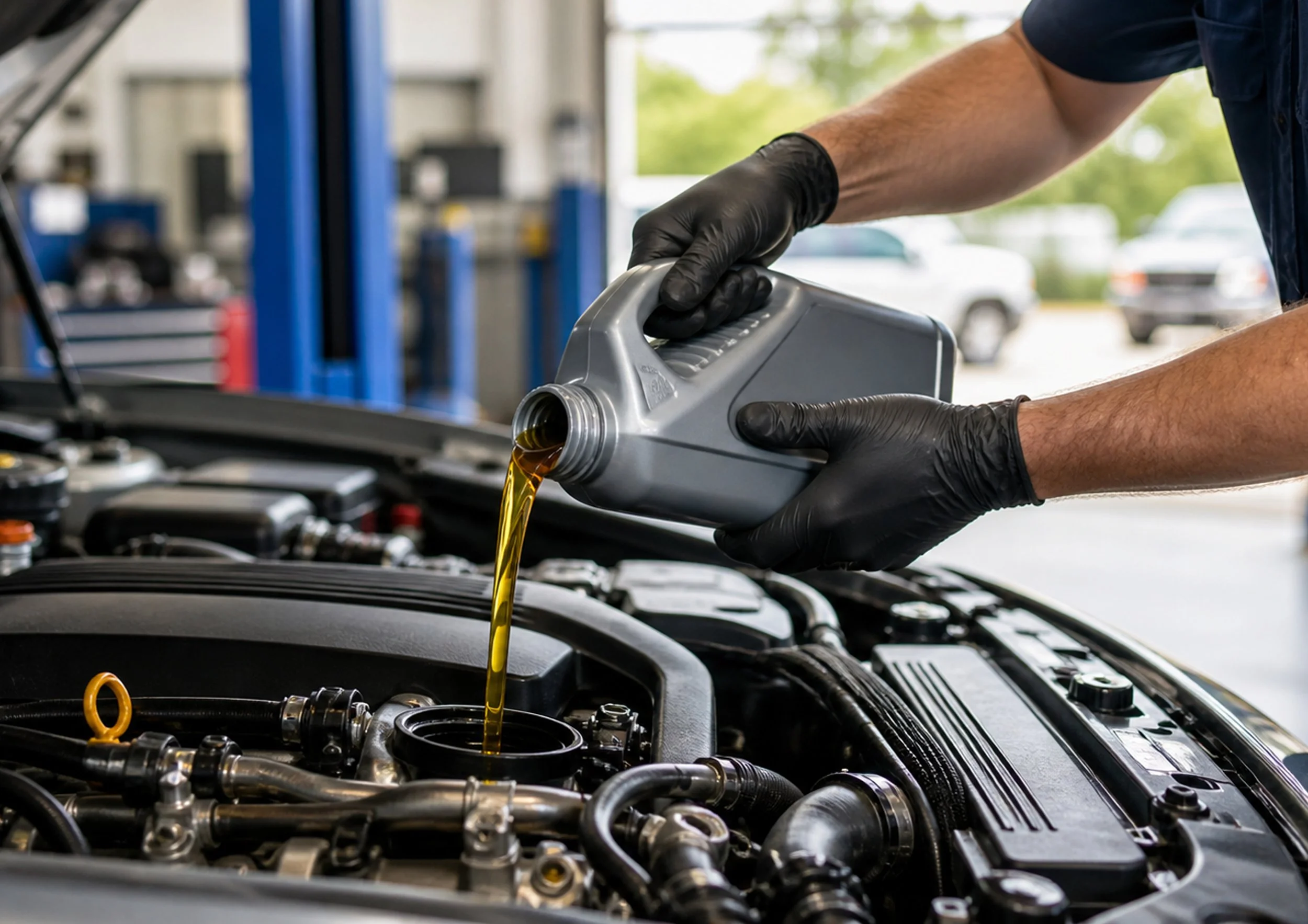
Stay Warm & On Schedule All Winter: STARS Pickup + Free Loaner Cars
You don’t have to bundle up and sit in a waiting room when a dashboard TPMS light, weak battery, or overdue oil change pops up in January. With STARS (Shade Tree Auto’s Remote Service), we pick up your vehicle right from your Johnston home or office, complete your winter inspection and maintenance in our heated bays, and return it to your driveway—with text approvals and online payment. Need transportation while your car is with us? Drivers age 25+ can also reserve a complimentary loaner car—and we cover the fuel.
See How STARS Free Pickup & Delivery WorksWinter safety benchmarks: 4/32" snow tread, -34°F antifreeze, and warranty protection
Preparing a vehicle for Central Iowa winters relies on measurable safety thresholds rather than guesswork—including 4/32" minimum tire tread depth for snow evacuation (twice the 2/32" legal wear-bar minimum), a 50/50 OEM antifreeze blend rated down to -34°F, and full battery Cold Cranking Amp capacity:
Under the federal Magnuson-Moss Warranty Act enforced by the Federal Trade Commission (FTC), having an independent ASE-certified facility perform your winter inspections, fluid services, and mechanical repairs keeps your new-car warranty 100% protected—and qualifying repairs at Shade Tree Auto are backed by our 4-year / 40,000-mile local warranty plus a 2-year / 24,000-mile nationwide NAPA warranty.
Winter car-care myths that waste money—and simple free habits that actually work
You do not need to idle your modern fuel-injected car for 15 minutes in your Johnston driveway every morning—extended cold idling wastes fuel, increases raw fuel dilution in your motor oil, and warms the engine slower than starting up, waiting 30 to 60 seconds for oil pressure to stabilize, and driving gently for the first few minutes.
Similarly, if your steering wheel suddenly starts shaking violently at 55+ mph on I-35/80 the morning after driving through deep slush, you probably don’t need a wheel balance—frozen slush packed inside your rim barrel throws the wheel out of balance and can be melted away for $0 at a warm car wash. And if our inspection spots an open NHTSA recall, we will send you straight to the dealership for free manufacturer coverage.
Frequently asked questions
We recommend running through a touchless car wash with an undercarriage flush every 10 to 14 days throughout winter—especially during sunny afternoon thaws after Polk County crews spray liquid calcium chloride brine. Rinsing salt residue off steel brake lines, fuel lines, caliper slide pins, and wheel wells dramatically slows undercarriage corrosion.
Air contracts as it cools—for every 10°F drop in outside temperature, tire pressure falls by roughly 1 PSI. A 40°F swing from autumn into a cold Iowa morning drops tires by 4 PSI, triggering your dashboard TPMS sensor. Inflate all four tires (plus the spare) to the exact cold PSI printed on your driver’s door-jamb sticker, and have us check for slow nail or rim-bead leaks if one tire keeps dropping.
In the Midwest, automotive batteries typically last 3 to 5 years. Because summer heat degrades internal lead plates and sub-zero winter cold cuts Cold Cranking Amps by 35% to 60%, any battery over 3 years old should be digitally load-tested each autumn so you can replace a weak unit proactively rather than getting stranded in January.
Johnston drivers are just minutes from our three Des Moines metro repair shops: Urbandale at 3831 70th St (just south of Johnston near Merle Hay Mall), Grimes HQ at 1750 SE 11th St. off Highway 141, and Ankeny at 1329 SW Ordnance Rd. We provide complimentary loaner cars with free fuel (for drivers age 25+), a free local shuttle, and STARS free pickup and return delivery Monday through Friday from 7:00 AM to 6:00 PM.
Want peace of mind before the next Iowa cold snap hits?
Book online at our nearby Urbandale, Grimes, or Ankeny shop—or request free STARS pickup in Johnston—and get battery CCA, coolant freeze point, snow tread, and brake photos texted to your phone.