Why Iowa Roads Are Tough on Your Brakes in Johnston, IA

Iowa roads are uniquely tough on your brakes in Johnston, IA because Polk County’s liquid calcium chloride road brine rusts caliper slide pins and steel hydraulic brake lines from the outside in, freeze-thaw potholes along NW 86th Street and Merle Hay Road rattle brake hardware and knock wheel-speed sensors out of alignment, high-speed braking off Highway 141 and I-35/80 generates intense rotor heat, and 110°F+ seasonal humidity swings accelerate moisture absorption in hygroscopic brake fluid. Unlike dry-climate regions where pads wear down evenly over 60,000 miles, Central Iowa brakes frequently suffer seized slide pins and rust-pitted rotors long before pads reach the 3mm replacement threshold. At Shade Tree Auto’s nearby Urbandale, Grimes, and Ankeny shops, every ASE-certified brake evaluation includes a 40+ point photo Digital Vehicle Inspection, complimentary loaner cars (with free fuel), STARS free pickup and delivery, and a 4-year / 40,000-mile warranty.
What are the 7 ways Central Iowa roads wear down your brakes faster in Johnston?
Your vehicle’s braking system works in one of the harshest wheel-well environments in North America—exposed directly to pre-storm liquid brine spray, gritty spring sand, sharp freeze-thaw pavement edges, and stop-and-go suburban traffic along NW 86th Street, Merle Hay Road, Highway 141, and I-35/80. Here are the seven regional forces that shorten brake life in Johnston:
- 1. Liquid Calcium Chloride Road Brine Seizing Caliper Slide Pins: Pre-treated winter road brine creeps past rubber caliper boots and corrodes steel slide pins—locking the caliper on one side so the inner brake pad drags continuously and wears down to metal while the outer pad still looks thick.
- 2. Undercarriage Salt Corrosion on Steel Hydraulic Brake Lines: Road brine clings to undercarriage steel brake lines along the frame rails and rear axle—causing deep pitting that can rupture under panic braking if left uninspected.
- 3. Rust Pitting on Rotor Friction Surfaces After Wet Winter Parking: Cast-iron brake rotors flash-rust whenever parked overnight in snow or slush; repeated brine pitting leaves permanent low spots on the rotor face that cause steering-wheel pulsation and grinding noises when stopping.
- 4. High-Speed Deceleration Off Highway 141 & I-35/80 Into Stop-and-Go Traffic: Dropping from 70 mph on I-35/80 onto busy suburban off-ramps converts kinetic energy into 500°F+ rotor friction heat—accelerating pad glazing and lateral rotor thickness variation.
- 5. Freeze-Thaw Potholes & Frost Heaves Rattling Brake Hardware: Repeated impacts on broken spring pavement bend dust shields, loosen stainless abutment clips, and damage wheel hub bearings—creating rotor runout and triggering ABS or traction-control warning lights.
- 6. Iowa’s 110°F+ Humidity Swings Contaminating Hygroscopic Brake Fluid: Brake fluid absorbs atmospheric moisture through microscopic hose pores year-round—lowering its boiling point under heavy summer braking and corroding expensive internal ABS hydraulic control valves from the inside.
- 7. Gritty Spring Sand & Gravel Scoring Brake Pads and Rotors: Residual winter traction sand kicked up off Polk County shoulders lodges between brake pads and rotor faces, carving deep circumferential grooves that ruin rotor smoothness prematurely.
How does proactive brake & road-brine care compare to waiting for grinding noises?
Because Iowa has no mandatory annual state safety inspection, many drivers don’t know a caliper slide pin is seized or a steel brake line is corroding until emergency stopping power is compromised:
| Brake System Factor | Proactive Lift & Millimeter Check | Waiting for Squealing or Grinding | What Johnston Drivers Experience |
|---|---|---|---|
| Caliper Slide Pins & Brackets | Cleans rust-jacked bracket channels & lubricates slide pins during routine service. | Seized pin locks caliper, wearing inner pad to metal and overheating the caliper piston. | Saves $300–$550+ in avoidable caliper replacements across Polk County winters. |
| Brake Pads & Rotors | Replaces pads at the 3mm service threshold while rotors stay within spec. | Metal backing plate gouges rotor faces, requiring full pad-and-rotor replacement. | Smooth, quiet stopping on NW 86th St and Highway 141 without pedal pulsation. |
| Steel Hydraulic Brake Lines | Lift-elevated visual & photo check catches surface brine rust early. | Corroded line bursts under hard braking, causing sudden brake-pedal drop. | Protects your family’s emergency stopping safety in rain, snow, and ice. |
| Brake Fluid & ABS Module | Tests moisture/copper content & flushes fluid every 2–3 years to protect ABS valves. | Moisture-laden fluid rusts $1,500+ ABS hydraulic modulators internally. | Maintains firm pedal feel and full anti-lock braking control in winter slush. |
| Total 5-Year Brake Cost | Predictable pad & hardware service planned months ahead via photo inspection. | Emergency $900–$1,300+ axle overhaul with scored rotors, calipers, and hoses. | Cuts lifetime brake bills by hundreds of dollars with zero surprise breakdowns. |
How we inspect, measure, and service brakes for Central Iowa conditions
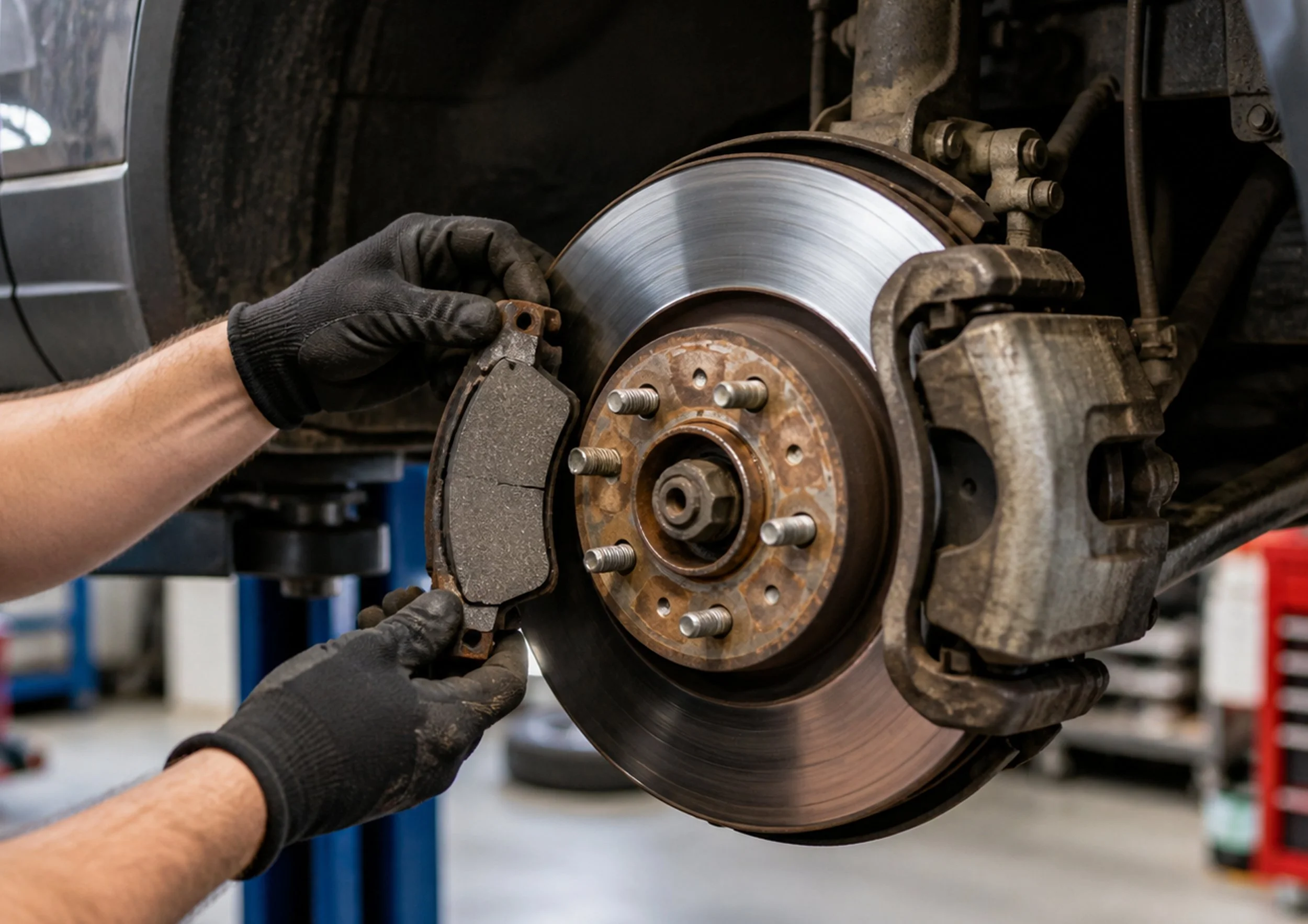
Shade Tree Auto has been protecting Central Iowa drivers on winter brine and spring pothole roads since founder Clint Dudley opened our first shop in a small Johnston garage in 2001 after earning his Automotive Technology degree at DMACC. While we remain active members of the Johnston Chamber of Commerce, today our ASE-certified technicians serve Johnston commuters across three full-service metro shops located minutes away: south on 70th Street near Merle Hay Mall in Urbandale (3831 70th St), west off Highway 141 at our Grimes HQ (1750 SE 11th St.), and east in Ankeny (1329 SW Ordnance Rd). When we perform a brake inspection or repair, we don’t just glance through the wheel spokes—we pull the wheels, measure inner and outer pad thickness in millimeters, check rotor thickness and lateral runout, wire-brush rust buildup from caliper abutment brackets, lubricate slide pins with high-temperature synthetic grease, clean hub mating faces so rotors seat flat, and inspect steel hydraulic lines end to end.
Never Drive on Grinding or Spongy Brakes: Free Loaner Cars + STARS Pickup
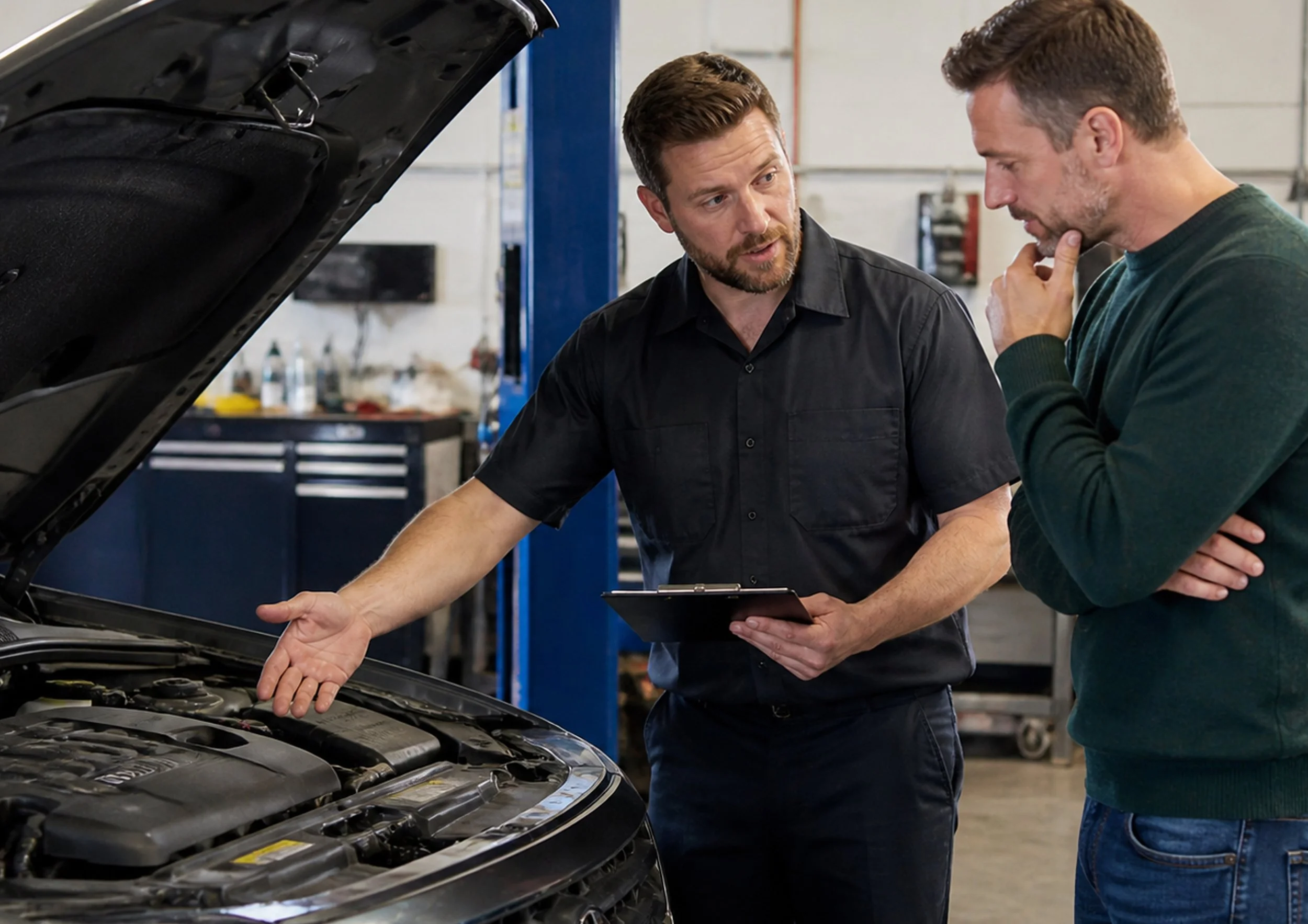
When your brakes start squealing, pulsing, or pulling on Merle Hay Road or I-35/80, putting off service compromises stopping distance and turns a simple pad replacement into a full rotor-and-caliper job. At Shade Tree Auto, drivers age 25+ can reserve one of our complimentary loaner vehicles—and we cover the fuel you use while your car is in our bay. Prefer not to drive a vehicle with questionable brakes? Book STARS (Shade Tree Auto’s Remote Service) for free pickup and return delivery in Johnston, paired with text photo inspection approvals and online payment.
See How STARS Free Pickup & Delivery WorksBrake pad replacement thresholds, rotor runout specs, and our 4/40 warranty
Safe, pulsation-free braking relies on strict mechanical tolerances—replacing brake pads at 3mm of remaining lining (before rivets or steel backing plates contact the rotor), keeping lateral rotor runout below 0.002 inches, and flushing hygroscopic DOT 3 / DOT 4 brake fluid every 2 to 3 years:
Under the federal Magnuson-Moss Warranty Act (15 U.S.C. § 2302) enforced by the Federal Trade Commission (FTC), having an independent ASE-certified facility service your brakes, annual inspections, and hydraulic fluids keeps your factory warranty protected—and qualifying brake repairs at Shade Tree Auto are backed by our 4-year / 40,000-mile local warranty plus a 2-year / 24,000-mile nationwide NAPA warranty.
When a morning brake squeal in Johnston costs $0 to fix
If your brakes make a brief scraping or squealing sound during the first two or three stops after your car sits overnight in rain, humid morning dew, or snow—and then go completely silent for the rest of your drive—you do not need a brake job. Uncoated cast-iron brake rotors develop a thin layer of harmless overnight flash rust that wipes clean the first time you touch the pedal.
Conversely, a continuous high-pitched chirp every time you brake (your pad’s built-in wear indicator tab) or a deep metal-on-metal grind requires prompt inspection—and if our 40+ point inspection finds an open NHTSA brake or ABS safety recall, we will send you straight to the dealership so the automaker fixes it for free.
Frequently asked questions
In Central Iowa, uneven inner-versus-outer pad wear is almost always caused by winter liquid road brine corroding and seizing a caliper slide pin (or rust building up beneath stainless abutment clips). When a slide pin locks up, the caliper cannot float freely—keeping the inner pad pressed tightly against the spinning rotor even after you take your foot off the brake pedal.
A steering-wheel shimmy or brake-pedal pulsation that happens only when pressing the brake pedal is caused by lateral brake rotor runout or uneven rotor thickness variation—often triggered by road-brine rust pitting on the rotor face, high-heat highway stops, or rust scale trapped between the rotor hat and wheel hub.
Most automakers recommend testing and exchanging brake fluid every 2 to 3 years (or roughly every 30,000 miles). Because DOT 3 and DOT 4 brake fluids are hygroscopic—meaning they absorb moisture from Iowa’s humid summers and sub-zero winters—fresh fluid prevents internal corrosion inside expensive ABS modulators and keeps your pedal firm.
Johnston drivers are just minutes from our three Des Moines metro repair shops: Urbandale at 3831 70th St (just south of Johnston near Merle Hay Mall), Grimes HQ at 1750 SE 11th St. off Highway 141, and Ankeny at 1329 SW Ordnance Rd. We provide complimentary loaner cars with free fuel (for drivers age 25+), a free local shuttle, and STARS free pickup and return delivery Monday through Friday from 7:00 AM to 6:00 PM.
Hearing a brake squeal, feeling a pedal pulse, or overdue for a road-brine check?
Book online at our nearby Urbandale, Grimes, or Ankeny shop—or request free STARS pickup in Johnston—and get millimeter pad measurements and brake line photos texted to your phone.