When Should You Replace Your Timing Belt in Johnston, IA?

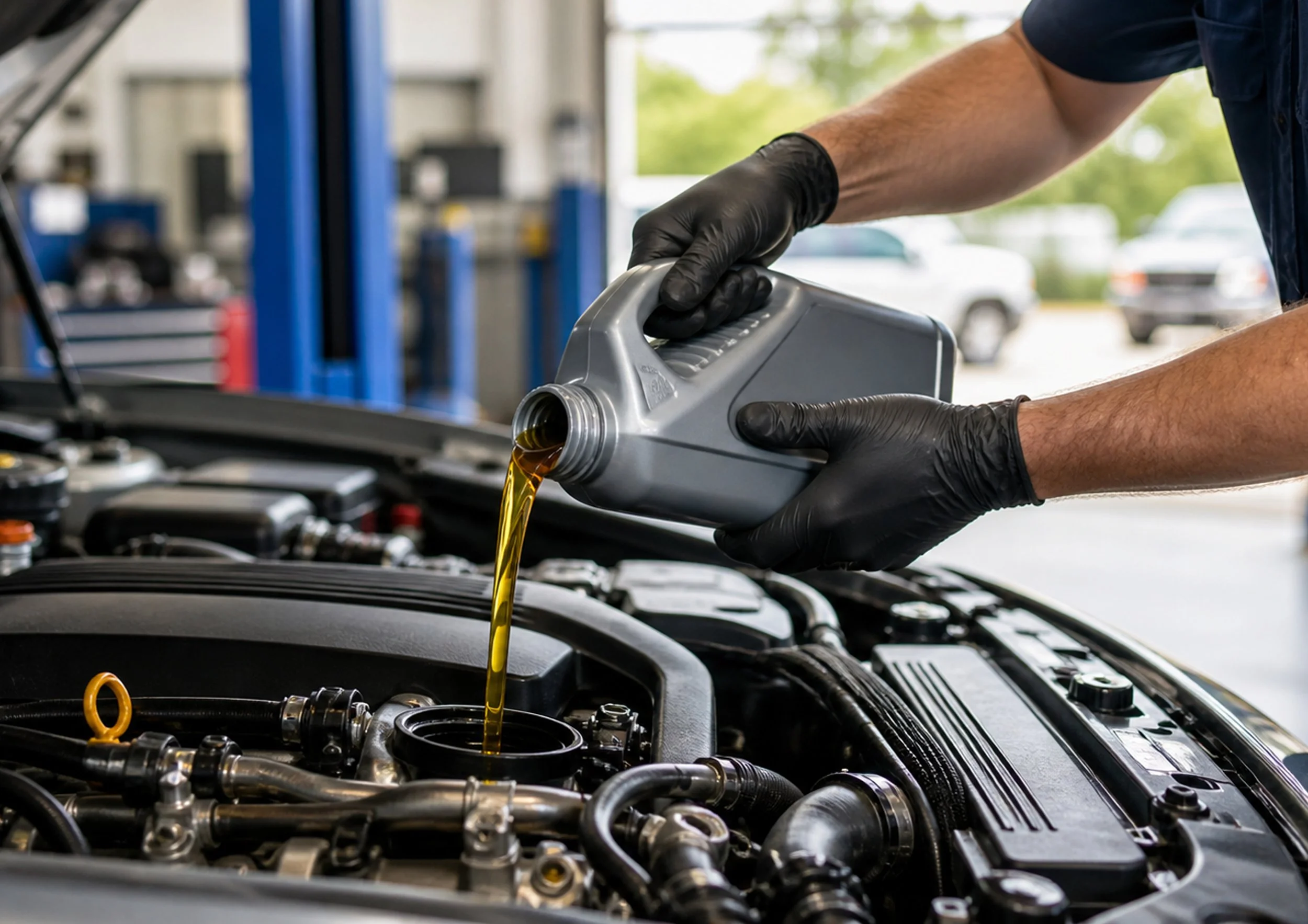
You should replace your timing belt every 60,000 to 100,000 miles or every 7 to 10 years—whichever comes first—based on your automaker’s maintenance schedule. Because timing belts are made of reinforced rubber that dries out and cracks over time from Central Iowa’s extreme swings between 95°F summers and sub-zero winters, waiting until a belt snaps on a modern interference engine can cause pistons to strike open valves and require a $4,000+ engine rebuild. For Johnston drivers, our nearby Urbandale, Grimes, and Ankeny shops pair ASE-certified timing belt and water pump kit replacements with a 40+ point Digital Vehicle Inspection, complimentary loaner cars, and a 4-year / 40,000-mile warranty.
What mileage intervals and warning signs mean your timing belt is due?
Unlike an external serpentine belt that you can see and hear squealing under the hood, your timing belt sits sealed behind plastic or aluminum timing covers—synchronizing the rotation of your crankshaft and camshafts to a fraction of a millimeter. Because a timing belt often breaks without making any noise beforehand, following OEM mileage and age milestones is your primary defense:
- Reaching 60,000 to 100,000 Miles (Check Your Owner’s Manual): Most belt-driven vehicles—including many Honda, Acura, Toyota/Lexus V6, Subaru, Volkswagen/Audi, and Hyundai/Kia models—require timing belt replacement between 60,000 and 105,000 miles.
- Reaching 7 to 10 Years of Age—Even With Low Mileage: Even if you only drive short errands along NW 86th Street and Merle Hay Road, heat cycles and sub-zero Iowa winter freezes harden rubber belt compounds over time, causing teeth to shear cleanly off the belt.
- Buying a Used Vehicle Without Documented Timing Belt History: If you purchase a used car with over 75,000 miles and no verified receipt showing timing belt and water pump replacement, scheduling a preventative replacement protects your investment immediately.
- Ticking or Clicking Sounds From the Front Timing Cover: A rhythmic ticking noise inside the engine’s front cover often points to a failing hydraulic timing-belt tensioner or worn idler pulley bearing—both of which can throw the belt off track.
- Coolant Seeping or Oil Leaks Near the Front of the Engine: On most engines, the water pump is driven directly by the timing belt; a weeping water pump bearing or leaking front camshaft/crankshaft seal contaminates rubber belt teeth with oil or coolant and accelerates belt failure.
- Rough Idle, Misfires, or Cam/Crank Correlation Codes: If a stretched belt jumps even one or two teeth, your engine will run roughly, lose power merging onto I-35/80, and trigger check engine light diagnostic codes (such as P0016) before complete failure occurs.
How does proactive timing belt replacement compare to waiting until it snaps?
The vast majority of modern belt-driven engines are interference engines—meaning pistons and intake/exhaust valves occupy the exact same cylinder space at different moments in the four-stroke cycle. Comparing scheduled replacement with driving until failure shows why timing belt service is the single highest-ROI preventative job on your vehicle:
| Ownership Factor | Proactive Timing Belt Kit Service | Waiting Until Belt Snaps | What Johnston Drivers Experience |
|---|---|---|---|
| Internal Engine Safety | Preserves exact cam-to-crank synchronization so valves and pistons never touch. | Pistons slam into open valves within milliseconds at highway or city RPMs. | Protects your engine block and cylinder heads from catastrophic internal collision. |
| Parts Replaced Together | Complete kit: OEM-grade timing belt, water pump, hydraulic tensioner, and idler pulleys. | Requires cylinder head removal, bent valve replacement, head gaskets, or full engine swap. | Bundling the water pump saves overlapping labor costs during the same tear-down. |
| Roadside Safety | Planned maintenance appointment booked at your convenience before a breakdown. | Instant, zero-warning engine stall in live traffic on I-35/80 or Highway 141. | Avoids sudden loss of power steering and braking assist in fast metro traffic. |
| Repair Cost Impact | Predictable, one-time scheduled maintenance investment every 7–10 years. | Often 3x to 5x higher—frequently exceeding the market value of an older vehicle. | Extends the dependable life of your Honda, Toyota, or Subaru well past 200,000 miles. |
| Warranty Protection | Backed by 4-year / 40,000-mile local + 2-year / 24,000-mile nationwide NAPA warranty. | Major engine teardowns may require weeks of machine-shop wait time. | Long-term peace of mind across the Des Moines metro and on out-of-state road trips. |
How we perform complete timing belt and water pump service for Johnston drivers
Shade Tree Auto has been helping Central Iowa drivers protect their engines since founder Clint Dudley opened our first shop in a small Johnston garage in 2001 after graduating from DMACC’s Automotive Technology program. While we remain active members of the Johnston Chamber of Commerce, today our ASE-certified technicians serve Johnston commuters across three full-service metro shops just minutes away: south on 70th Street near Merle Hay Mall in Urbandale (3831 70th St), west off Highway 141 at our Grimes HQ (1750 SE 11th St.), and east in Ankeny (1329 SW Ordnance Rd). Because reaching the timing belt requires removing accessory drive belts, motor mounts, and timing covers, we install complete OEM-quality timing kits—replacing the timing belt, water pump, hydraulic tensioner, and idler pulleys together while inspecting front cam/crank seals and refilling with fresh OEM-approved coolant.

Zero Workday Disruption for Major Service: Free Loaner Cars (With Free Fuel) + STARS Pickup
A complete timing belt and water pump replacement is a precision multi-hour job, so we make sure you never miss a beat in Johnston. Drivers age 25+ can reserve one of our complimentary loaner vehicles—and we cover the fuel you use while your car is in our bay. Prefer not to leave home or the office? Book STARS (Shade Tree Auto’s Remote Service) for free vehicle pickup and return delivery anywhere in the Des Moines metro, paired with text inspection approvals and online payment.
See How STARS Free Pickup & Delivery WorksOEM timing belt replacement rules and federal warranty protection
Automakers engineer timing belts from Hydrogenated Nitrile Butadiene Rubber (HNBR) reinforced with fiberglass cords—a material designed to endure millions of high-RPM revolutions, yet still subject to both cumulative mileage and thermal aging across Central Iowa’s sub-zero winters and 95°F summers:
Under the federal Magnuson-Moss Warranty Act enforced by the Federal Trade Commission (FTC), having an independent ASE-certified repair facility perform your factory-scheduled tune-ups and timing belt maintenance maintains your warranty coverage and builds a verified digital service record. Every timing belt replacement at Shade Tree Auto is backed by our 4-year / 40,000-mile local warranty plus a 2-year / 24,000-mile nationwide NAPA warranty.
When replacing a timing belt is NOT what your vehicle needs
Many late-model engines—including most 4-cylinder Hondas and Toyotas built after 2003, Ford EcoBoost engines, and GM V6/V8 trucks—use an internal metal timing chain bathed in engine oil rather than a rubber timing belt. Timing chains do not have a scheduled 60,000-to-100,000-mile replacement interval and typically last the life of the engine when oil is changed every 5,000 miles. We always verify your exact engine design by VIN first so you never pay for timing belt service your vehicle doesn’t use.
Additionally, if your timing belt has already snapped while driving on an interference engine, we perform cylinder compression and borescope valve checks before recommending a new belt kit—so you know honestly whether your cylinder heads escaped damage or require internal valve work.
Frequently asked questions
Most automakers specify timing belt replacement every 60,000 to 100,000 miles or every 7 to 10 years, whichever comes first. Even if your vehicle has low mileage, Central Iowa’s extreme temperature swings between 95°F summer heat and sub-zero winter cold gradually harden rubber belt teeth—making the 7-to-10-year age limit just as important as odometer mileage.
On almost all timing-belt engines, the water pump, hydraulic tensioner, and idler pulleys are driven directly by the timing belt behind the exact same engine covers. Replacing them together as a complete kit adds minimal labor during the tear-down and prevents a seized water pump bearing or weak tensioner from snapping your brand-new timing belt 15,000 miles later.
You can check the scheduled maintenance guide in your owner’s manual—if a 60k–105k timing belt replacement is listed, your engine uses a rubber timing belt. Because some automakers use a timing chain on 4-cylinder models and a timing belt on V6 models of the exact same car, our service advisors can look up your VIN in seconds and confirm which system your engine uses.
Johnston drivers are just minutes from our three Des Moines metro repair shops: Urbandale at 3831 70th St (just south of Johnston near Merle Hay Mall), Grimes HQ at 1750 SE 11th St. off Highway 141, and Ankeny at 1329 SW Ordnance Rd. We provide complimentary loaner cars with free fuel (for drivers age 25+), a free local shuttle, and STARS free pickup and return delivery Monday through Friday from 7:00 AM to 6:00 PM.
Approaching 60,000–100,000 miles or unsure when your timing belt was last changed?
Book online at our nearby Urbandale, Grimes, or Ankeny shop—or request free STARS pickup in Johnston—and get a 40+ point digital inspection texted to your phone before any work begins.